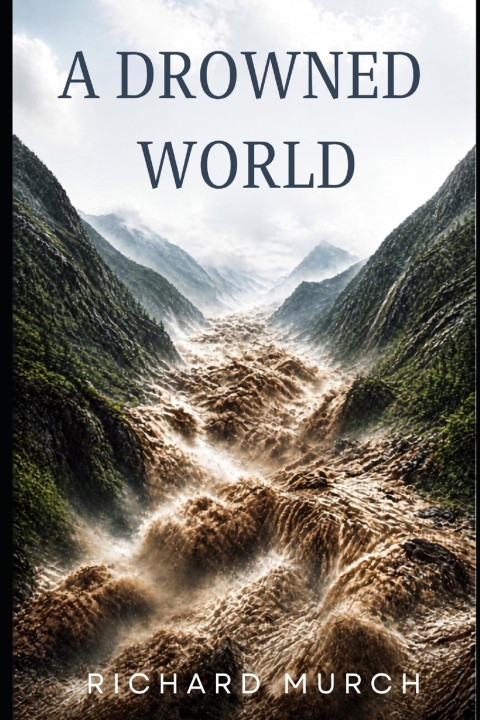
On the morning of 26 August 2026, a mountainside came down onto the border between Nepal and Tibet. It was a dry Wednesday. There had been no storm, no rainfall warning, and no reason for anyone at the crossing to look up.
Within minutes a wall of ice, rock and water was moving down the valley at the speed of a train over 75 MPH, and by nightfall a trade route used for centuries had ceased to exist. The question that opens this book is the one that disaster poses: how does a flood arrive on a day with no rain? Over 1,500 people were missing
This is a book about drowning, and about the people who did not drown because somebody warned them in time. It is written for the general reader, not for the hydrologist, and it assumes no prior knowledge of climate science, glaciology or civil engineering. Every technical idea is introduced through a place and a person before it is introduced as a concept.
Answering it requires going back five years, and to a continent where the water still falls from the sky.
Between 2021 and 2026, Europe experienced the largest flood disasters in its modern history. Two hundred and forty-three people died in the valleys of Germany and Belgium in a single July.
Two-thirds of Slovenia went under water in four days. Around two hundred and thirty people drowned in Valencia in an evening, most of them in cars, garages and ground-floor rooms, in a suburb built across a ravine that flows twice in a century.
In the Himalaya, meanwhile, the ice that has held those mountains together for millennia began to fail, and a new kind of catastrophe emerged: one that arrives without warning, without weather, and frequently from across an international border.
This book sets those events side by side because they are usually reported apart. Each is covered as an exception, mourned for a week, and filed. Read consecutively, they describe something else entirely - a pattern that governments have been slow to name and slower to fund.
The argument is not that flooding can be stopped. It cannot. It is that the death toll is not written by the atmosphere. Storm Daniel killed seventeen people in Greece and thousands in Libya within a single week, from the same sea. Two glacial lakes destroyed a Nepali village in 2024 and killed nobody, because it happened in daylight. In every pair, the water was comparable and the outcome was not.
What differed was warning, maintenance, planning law and where people had been permitted to build. That is the subject of this book, and it is the reason for reading it. The water goes where the ground takes it. Everything else is ours.