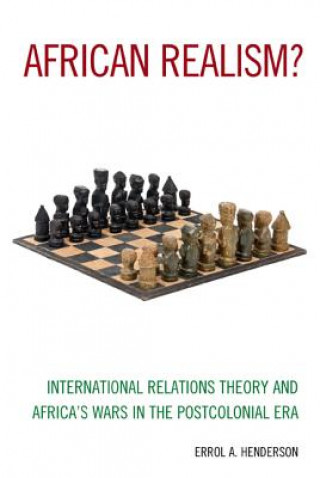
Könyv African Realism Errol A. Henderson

African Realism

International Relations Theory and Africa's Wars in the Postcolonial Era

Nyelv: Angol
Kötés: Kemény kötésű
Elérhetőség: Beszállítói készleten
Küldés 14-21 napon belül
52 244 Ft
African Realism explains Africa's international conflicts of the postcolonial era through internatio...

Információk a könyvről

Nyelv
Angol
Kötés
Könyv - Kemény kötésű
Kiadva
2015
oldal
342
EAN
9781442239500
ISBN
1442239506
Enbook ID
05134819
Súly
599
Méretek
152 x 229 x 28

Teljes leírás

African Realism explains Africa's international conflicts of the postcolonial era through international relations theory. It looks at the relationship between Africa's domestic and international conflicts, as well as the impact of factors such as domestic legitimacy, trade, and regional economic institutions on African wars. Further, it examines the relevance of traditional realist assumptions (e.g. balance of power, the security dilemma) to African international wars and how these factors are modified by the exigencies of Africa's domestic institutions, such as neopatrimonialism (i.e., rulership that relies on patron-client associations in a facade of formal bureaucracy for governance) and inverted legitimacy. This context compels the practice of reciprocal support of the insurgents of a state's rivals, a form of "neopatrimonial balancing," which links Africa's domestic and international conflicts. This study also addresses the inconsistencies and inaccuracies of international relations theory as it engages African international relations, and especially, its military history. It argues that the major impetus of Africa's international politics in the postcolonial era is found in African domestic politics. Thus explanations of Africa's international wars require a focus on the domestic political framework of Africans states. Applying realist assumptions, the text examines the extent to which neopatrimonial balancing accounts for the incidence of African international conflict and its applicability to African conflict processes as compared to several prominent liberal theses (e.g. the democratic peace, liberal trade theory, and institutional peace claims). This approach recognizes African initiatives within a postcolonial-and largely neocolonial-context without abrogating African agency. In the postcolonial era, Africans chose from a range of foreign policy behaviors and those that were often pursued in their relations to each other were those that were commonly practiced by the former colonial powers, the major powers, and increasingly, the regional powers on the continent. Because of its focus on balance of power practices and on domestic characteristics of states as predictors to their foreign policy behavior, it appears that traditional realist practices more clearly inform Africa's international conflict practices than any other international relations theory.

Érdekelheti

12 942 Ft
7 546 Ft
5 863 Ft

Girardians

James G. Williams
10 536 Ft
10 689 Ft

Azok a vásárlók, akik ezt a könyvet megvásárolták, a következőket is megvásárolták

5 593 Ft

Konsum

Doris Rosenkranz
19 860 Ft

Briefe

Ludwig Ritter Von K Chel
6 078 Ft

Gartenglück

Elsemarie Maletzke
4 301 Ft