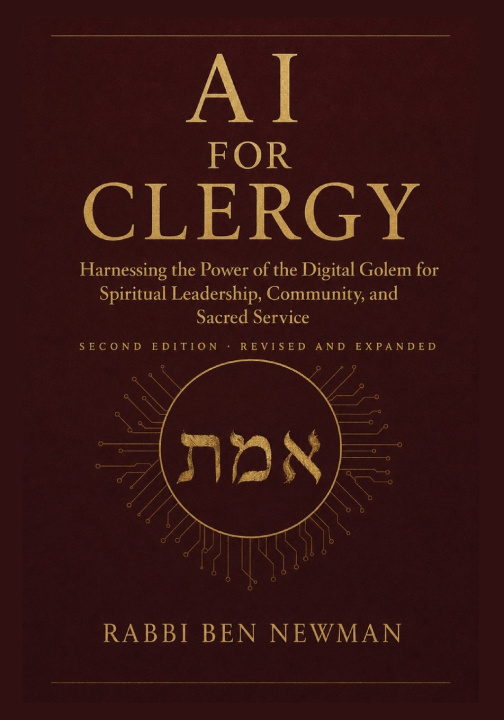
In sixteenth-century Prague, the Maharal shaped a servant from clay and gave it life with a word. We remember the wonder. The story ends with a flooded house, because no one thought to tell the Golem when to stop.
AI now drafts sermons, translates liturgy, summarizes board packets, and answers a frightened congregant at three in the morning. Whether clergy will use these tools is settled. What remains is harder: what we entrust to them, what we withhold, how we verify what they give back, and where human presence stays irreplaceable.
Rabbi Ben Newman writes from inside the work - the sermon due Friday, the hospital room, the contract negotiation, the teenager in crisis at midnight. He is candid about what AI does well, blunt about where it fails, and clear throughout that fluency is not presence.
This second edition is substantially revised and expanded, and it opens by naming what the first edition got wrong. New material includes AI that acts rather than merely answers, synthetic media and the impersonation of religious leaders, and the congregant who arrives convinced a chatbot has named them as chosen.
Inside you'll find:
- Practical guidance for sermon preparation, lifecycle rituals, teaching, youth work, fundraising, and administration
- Pastoral confidentiality treated as a sacred obligation rather than a settings menu
- A one-page crisis protocol written to hand your religious-school staff
- Fifteen power-user techniques most people never discover - including the one that solves the blank page
- A model AI-use policy your board can adopt, plus a youth and family covenant
- Honest answers to the questions congregants actually ask, about energy use, plagiarism, and whether this is making us dumber
Written for rabbis, ministers, priests, imams, chaplains, cantors, and lay leaders across traditions - grounded in Jewish thought, useful in any house of worship.