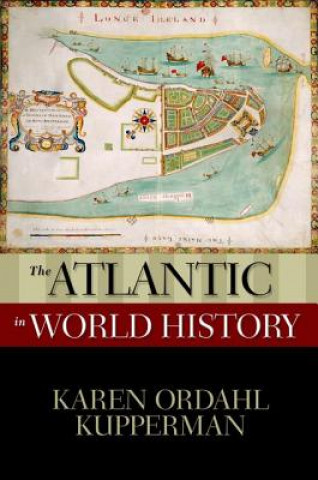
Könyv Atlantic in World History Karen Ordahl Kupperman

Atlantic in World History

Nyelv: Angol
Kötés: Puha kötésű
Elérhetőség: Beszállítói készleten
Küldés 10-18 napon belül
9 807 Ft
As the Atlantic Ocean was transformed from a terrifying barrier into a highway uniting four continen...


Információk a könyvről

Nyelv
Angol
Kötés
Könyv - Puha kötésű
Kiadva
2012
oldal
168
EAN
9780195338096
ISBN
9780195338096
Enbook ID
01236702
Súly
268
Méretek
233 x 161 x 8

Teljes leírás

As the Atlantic Ocean was transformed from a terrifying barrier into a highway uniting four continents, the lives of people all around the ocean were transformed. After 1492 merchants and political leaders around the Atlantic refocused their attention from trade highways in their interiors to the coasts. Those who emigrated, willingly or unwillingly, had their lives changed completely, but many others became involved in new trades and industries that necessitated consolidation of populations. American gold and silver contributed to the emergence of nation-states. New foods enriched diets all over the world. American foods such as fish, cassava, maize, tomatoes, beans, and cacao fed burgeoning populations. Sugar grown around the Atlantic transformed tastes everywhere. Tobacco was the first great consumer craze. Furs provided the raw material for fashionable broad hats. Chains of commodity exchange linked the Atlantic to the Pacific; they also linked Americans to the Mediterranean and the goods of the Middle East. Creation of Atlantic economies required organization of labor and trade on a scale previously unknown. Generations of Europeans who signed up for servitude for a number of years in order to pay their passage over were gradually supplanted by enslaved Africans, millions of whom were imported into slavery. Wars, fueled by the need for ever more slaves, spread throughout West and Central Africa. The African end of the slave trade produced powerful rulers and great confederations in Africa. Consolidation of displaced tribal groups and remnants of populations depleted by epidemic disease led to the emergence of the Six Nations of the Iroquois League in northern North America, and the Creeks, Cherokees, and others in the south. Those who made a choice to travel across the Atlantic did so for economic advancement, but many also were influenced by religious concerns. Conflict between Roman Catholics and Protestants in Europe, and the power of political leaders to force conformity, caused many to feel that their right to worship was under threat. They were willing to accept servitude to make emigration possible, in order to protect their religious lives. Attempting to create and control vast networks of settlement and trade enhanced the rise of nation-states in Europe and contributed to the growth of national identities. The wars of independence in the late eighteenth and nineteenth centuries changed the nature of relationships, but did not end them. Abolitionism serves as a vivid example of the collision of religious, philosophical, and economic realities and the ways in which the Atlantic context posed new possibilities and new answers.

Érdekelheti

5 063 Ft

Learning to Forgive

Walter R Smith
12 019 Ft

Chicago's Block Clubs

Amanda I. Seligman
40 054 Ft

Fountain

Angela Thaden Hahn
7 549 Ft

Rust Belt Arcana

Matt Stansberry
4 425 Ft
5 497 Ft

Reality Frame

Brian Clegg
10 313 Ft
12 658 Ft

How To Watch Football

Tifo - The Athletic
4 425 Ft
21 119 Ft
77 444 Ft
45 810 Ft
13 712 Ft
4 443 Ft

10 Dance 6

Inouesatoh
4 411 Ft

Damanhur

Jeff Merrifield
8 927 Ft

Azok a vásárlók, akik ezt a könyvet megvásárolták, a következőket is megvásárolták

Mbanza brûle

Loutonadio
4 949 Ft

Tri brehy Dunaja

Pavol Boroš
5 264 Ft

الربح من الإنترنت

علاء محمود حسين
4 657 Ft
6 103 Ft

Bhagavad Gita

Anonymous
4 078 Ft
46 084 Ft

Die Wolke

Gudrun Pausewang
3 198 Ft

Ambers Diary

Annette Teermann
3 444 Ft

ggg.plattform.ka

Irene Pietsch
6 263 Ft
3 011 Ft