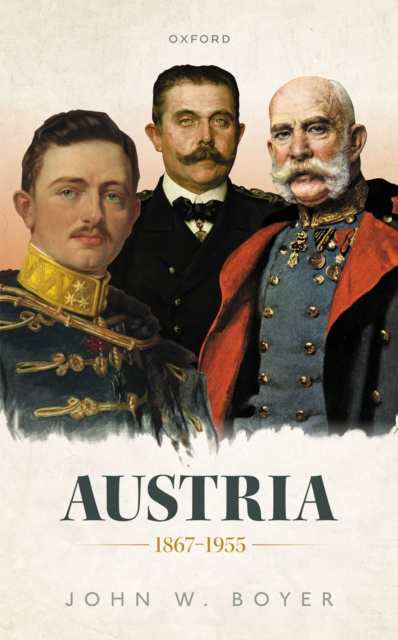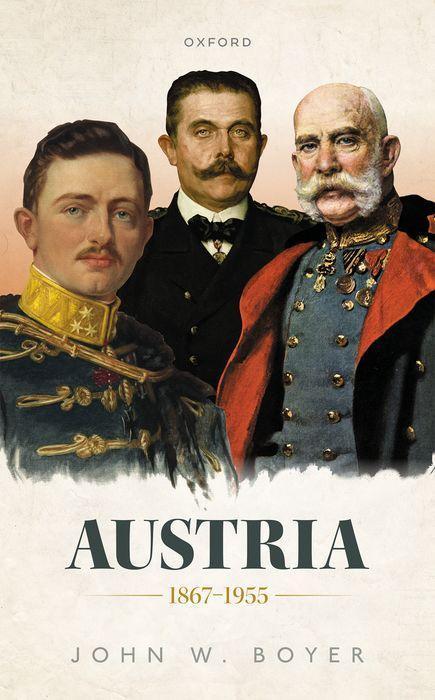
Könyv Austria 1867-1955 Boyer

Austria 1867-1955

Nyelv: Angol
Kötés: Kemény kötésű
Elérhetőség: Beszállítói készleten
Küldés 14-21 napon belül
23 592 Ft
Austria 1867-1955 connects the political history of German-speaking provinces of the Habsburg Empire...

Információk a könyvről

Nyelv
Angol
Kötés
Könyv - Kemény kötésű
Kiadva
2022
oldal
1152
EAN
9780198221296
ISBN
0198221290
Enbook ID
38630050
Súly
1412
Méretek
241 x 163 x 61

Teljes leírás

Austria 1867-1955 connects the political history of German-speaking provinces of the Habsburg Empire before 1914 (Vienna and the Alpine Lands) with the history of the Austrian Republic that emerged in 1918. John W. Boyer presents the case of modern Austria as a fascinating example of democratic nation-building. The construction of an Austrian political nation began in 1867 under Habsburg Imperial auspices, with the German-speaking bourgeois Liberals defining the concept of a political people (Volk) and giving that Volk a constitution and a liberal legal and parliamentary order to protect their rights against the Crown. The decades that followed saw the administrative and judicial institutions of the Liberal state solidified, but in the 1880s and 1890s the membership of the Volk exploded to include new social and economic strata from the lower bourgeoisie and the working classes. Ethnic identity was not the final structuring principle of everyday politics, as it was in the Czech lands. Rather social class, occupational culture, and religion became more prominent variables in the sortition of civic interests, exemplified by the emergence of two great ideological parties, Christian Socialism and Social Democracy in Vienna in the 1890s. The war crisis of 1914/1918 exploded the Empire, with the Crown self-destructing in the face of military defeat, chronic domestic unrest, and bitter national partisanship. But this crisis also accelerated the emergence of new structures of democratic self-governance in the German-speaking Austrian lands, enshrined in the republican Constitution of 1920. Initial attempts to make this new project of democratic nation-building work failed in the 1920s and 1930s, culminating in the catastrophe of the 1938 Nazi occupation. After 1945 the surviving legatees of the Revolution of 1918 reassembled under the four-power Allied occupation, which fashioned a shared political culture which proved sufficiently flexible to accommodate intense partisanship, resulting, by the 1970s, in a successful republican system, organized under the aegis of elite democratic and corporatist negotiating structures, in which the Catholics and Socialists learned to embrace the skills of collective but shared self-governance.

Érdekelheti

The Tragedy of Central Europe

Ellis Ashmead-Bartlett
13 176 Ft

Austria 1867-1955

John W. Boyer
12 866 Ft
5 860 Ft
109 323 Ft

Habsburg Empire

Pieter M. Judson
12 048 Ft
7 297 Ft
8 282 Ft
13 393 Ft

The Art of Arcane

Elisabeth Vincentelli
17 085 Ft
6 304 Ft

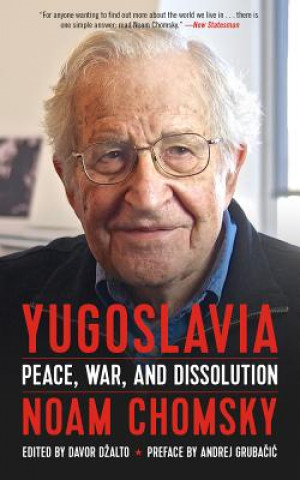
Yugoslavia

Andrej Grubacic
6 710 Ft

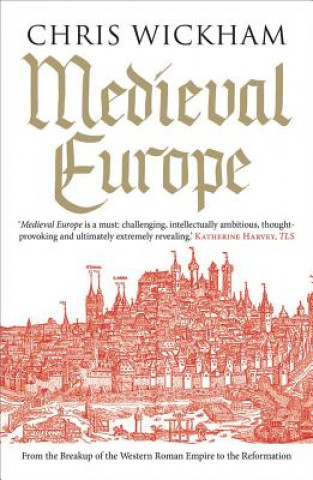
Medieval Europe

Chris Wickham
6 170 Ft

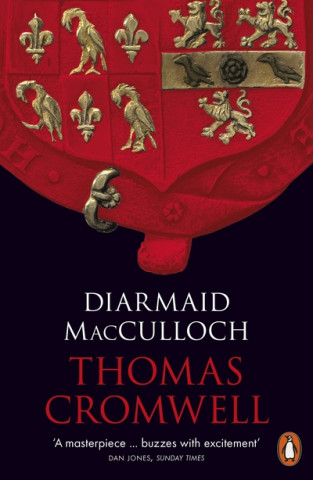
Thomas Cromwell

Diarmaid MacCulloch
7 621 Ft

Azok a vásárlók, akik ezt a könyvet megvásárolták, a következőket is megvásárolták

8 896 Ft
4 145 Ft