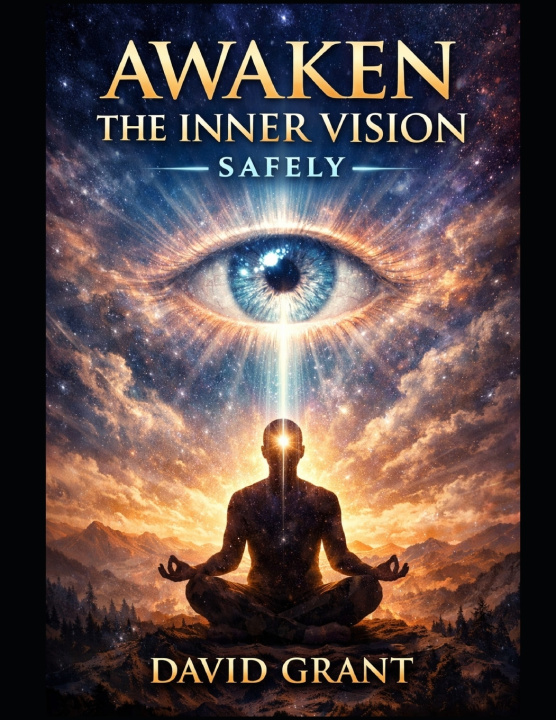
Awakening the Inner Vision Safely is a grounded, comprehensive guide to spiritual awakening that places clarity, psychological stability, and ethical integrity above spectacle and force.
Written for sincere seekers who feel the inner call to awakening but wish to avoid confusion, extremism, or harm, this book reframes kundalini and third eye awakening not as dramatic supernatural events, but as a gradual reorganization of awareness within the human nervous system. Drawing from ancient yogic, tantric, and contemplative traditions-while remaining firmly rooted in modern psychological understanding-it bridges spirituality, neuroscience, and lived experience.
Rather than promoting energy manipulation or rapid activation techniques, this work emphasizes preparation, integration, and safety. Readers are guided step by step through the foundations of consciousness, identity, and ego structure; the symbolic nature of chakras and subtle energy; the realities and risks of kundalini awakening; and the true meaning of the third eye as integrated intelligence rather than psychic spectacle.
The book offers:
A clear, demystified explanation of kundalini and third eye awakening
Strong emphasis on nervous system regulation, mental health, and trauma awareness
Ethical foundations and emotional maturity as prerequisites for awakening
Grounding practices often ignored in modern spiritual culture
Gentle, safe meditation practices for awareness, integration, and inner clarity
Guidance for integrating awakening into ordinary life, creativity, and service
Awakening the Inner Vision Safely is not a promise of instant enlightenment, psychic powers, or dramatic experiences. It is a roadmap for those who value depth over fantasy, wisdom over power, and integration over intensity.
This book is for readers who seek awakening that strengthens life rather than disrupts it-awakening that brings clarity instead of collapse, insight instead of illusion, and compassion instead of egoic inflation.
True awakening, as this book reveals, is not extraordinary because it is dramatic-but because it is stable, humane, and real.