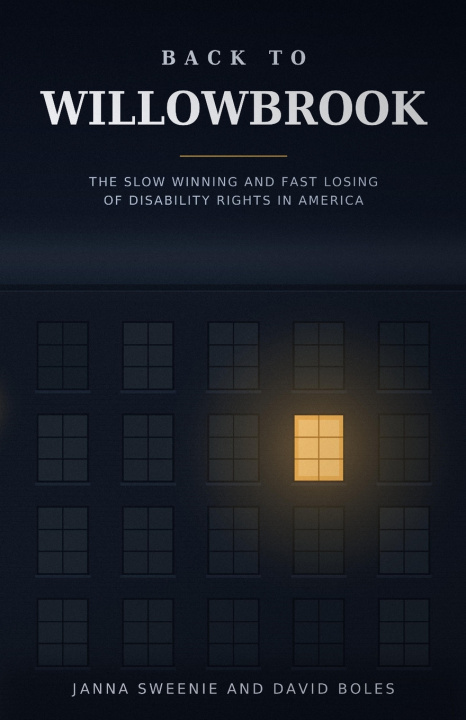
On April 23, 2016, a warning went up in a comment thread beneath a blog entry about the ugly laws: the ADA is in danger, and the disabled are being propelled backward. Ten years later came the memorandum that proved the warning right. Back to Willowbrook is the record of how America taught itself to see disabled people as citizens, and of how fast that teaching is being unlearned.
The slow winning opens in May 1881, when Chicago made it unlawful for anyone "diseased, maimed, mutilated, or in any way deformed" to appear in public view, and it runs through the wards of Willowbrook State School, where a hidden camera in 1972 showed the country what removal had built. It holds the twenty-five days in 1977 when disabled occupiers refused to leave a federal building until Section 504 was signed unchanged, and the week in March 1988 when Gallaudet students closed their university until it seated a Deaf president. It ends at the Americans with Disabilities Act.
Then comes the fast losing. Rights survive as interpretations, and interpretations are governable. A 2026 memorandum adopts a reading of the law that the federal courts have rejected. Work requirements meter Medicaid by the reported hour, and an Arkansas experiment that removed 18,164 people from coverage became national policy after its results were published. Waiting lists grow where wards once stood, and coverage lost is rarely coverage alone.
Inside the history stands a witness. Janna Sweenie has taught American Sign Language at New York University since 1991 and has spent more than two decades as a vocational rehabilitation counselor inside the systems this book documents. Her testimony runs through these pages in the first person: the classroom where the voice goes off, the certification floor collapsing, the students solicited to work free, the friends penalized for requesting what the law promises.
David Boles posted the 2016 warning and keeps the archive this book draws on, including the thread where the record begins. Together they follow the story to the Willowbrook Mile, the memorial path on the old grounds, and to a date circled for the last night of 2026. One window in the building is still lit. This book is the light in it, kept on so that what returns can never claim it was never seen. The record runs through July 2026.