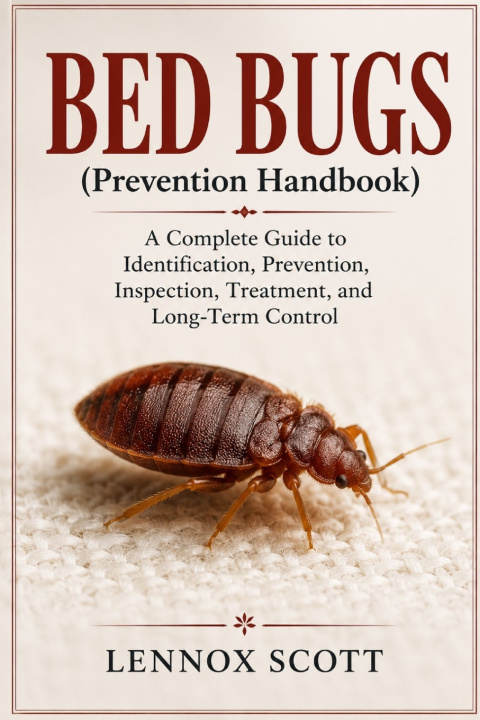
Bed Bugs: Prevention Handbook is a comprehensive guide designed to help homeowners, renters, travelers, property managers, and business owners understand, prevent, detect, and manage bed bug infestations using practical, science-based strategies. Rather than relying on myths or ineffective home remedies, this handbook emphasizes early detection, routine inspections, and Integrated Pest Management (IPM) as the most effective long-term approach to bed bug prevention and control.
The book begins by introducing the biology and behavior of bed bugs, explaining how they feed, reproduce, hide, and spread through travel, luggage, furniture, and shared living spaces. Readers learn how to recognize the early signs of an infestation, including live insects, eggs, shed skins, fecal spots, and bite-related clues, while understanding that bites alone cannot confirm the presence of bed bugs.
Subsequent chapters focus on preventing infestations in homes, apartments, dormitories, hotels, healthcare facilities, workplaces, schools, and other public spaces. Practical advice is provided on inspecting sleeping areas, protecting luggage during travel, safely handling secondhand furniture, reducing household clutter, and maintaining regular monitoring routines. The handbook also explores professional inspection techniques, bed bug monitoring devices, mattress encasements, heat and steam treatments, vacuuming, laundering, and the appropriate role of insecticides within an Integrated Pest Management program.
Special attention is given to the recovery process after treatment, helping readers restore their homes through careful cleaning, continued monitoring, and the development of preventive habits that reduce the likelihood of reinfestation. Common myths and misconceptions are addressed using current scientific understanding, enabling readers to separate fact from fiction and make informed decisions without unnecessary fear or stigma.
The handbook concludes by bringing together the essential principles of long-term prevention: awareness, education, routine inspections, prompt reporting of suspicious signs, and collaboration with qualified pest management professionals when needed. By following the evidence-based recommendations presented throughout this guide, readers can significantly reduce the risk of bed bug infestations while protecting their homes, families, businesses, and communities.
Whether you are preventing your first encounter with bed bugs or seeking to avoid future infestations after successful treatment, this handbook provides the knowledge and practical tools needed to respond with confidence, protect your living environment, and maintain long-term peace of mind.