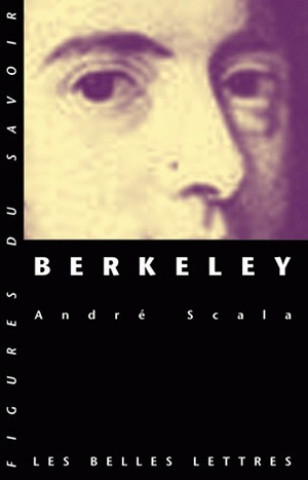
Esse est percipi : " to be is to be perceived. " This seemingly innocuous phrase, which distils the very essence of the philosophy of George Berkeley (1685-1753), caused an uproar in its day. Leibniz, Voltaire, Diderot, Rousseau and Kant considered it to be the most preposterous exaggeration and perceived Berkeley as being more interested in getting himself noticed than in dedicating himself seriously to philosophy.This work by André Scala sheds light on this unusual figure, who was an Irishman and Anglican, a bishop and a philosopher whose thought nurtured not only the entire school of empiricist philosophy, but also an aesthetic and practice of the art whose influence could be felt as early as from Faulkner's writings, on up to contemporary painting.André Scala, who holds an agrégation degree in philosophy, teaches at Université de Valenciennes and Université de Lille III. He has published Spinoza, Traité de la Réforme de l'entendement (introduction, traduction et notes), Pieter de Hooch and co-authored, with Michel Field, Petits dialogues entre amis. He also co-wrote the film script for Les derniers jours d'Emmanuel Kant, directed by Philippe Collin.