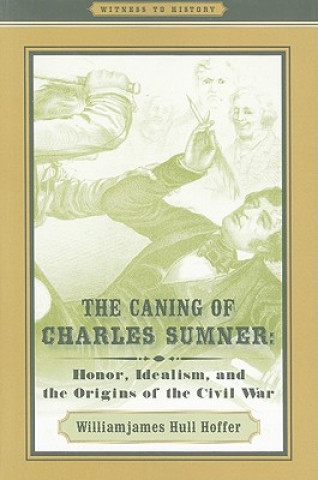
Könyv Caning of Charles Sumner Williamjames Hull Hoffer

Caning of Charles Sumner

Honor, Idealism, and the Origins of the Civil War

Nyelv: Angol
Kötés: Puha kötésű
Elérhetőség: Beszállítói készleten alacsony példányszámban
Küldés 11-15 napon belül
10 606 Ft
A signal, violent event in the history of the United States Congress, the caning of Charles Sumner o...

Információk a könyvről

Nyelv
Angol
Kötés
Könyv - Puha kötésű
Kiadva
2010
oldal
160
EAN
9780801894695
ISBN
0801894697
Enbook ID
04710318
Súly
224
Méretek
153 x 227 x 12

Teljes leírás

A signal, violent event in the history of the United States Congress, the caning of Charles Sumner on the Senate floor embodied the complex North-South cultural divide of the mid-nineteenth century. Williamjames Hull Hoffer's vivid account of the brutal act demonstrates just how far the sections had drifted apart and explains why the coming war was so difficult to avoid. Sumner, a noted abolitionist and gifted speaker, was seated at his Senate desk on May 22, 1856, when Democratic Congressman Preston S. Brooks approached, pulled out a gutta-percha walking stick, and struck him on the head. Brooks continued to beat the stunned Sumner, forcing him to the ground and repeatedly striking him even as the cane shattered. He then pursued the bloodied, staggering Republican senator up the Senate aisle until Sumner collapsed at the feet of Congressman Edwin B. Morgan. Colleagues of the two intervened only after Brooks appeared intent on beating the unconscious Sumner severely-and, perhaps, to death. Sumner's crime? Speaking passionately about the evils of slavery, which dishonored both the South and Brooks's relative, Senator Andrew P. Butler. Celebrated in the South for the act, Brooks was fined only three hundred dollars, dying a year later of a throat infection. Sumner recovered and served out a distinguished Senate career until his death in 1873. Hoffer's narrative recounts the caning and its aftermath, explores the depths of the differences between free and slave states in 1856, and explains the workings of the Southern honor culture as opposed to Yankee idealism. Hoffer helps us understand why Brooks would take such great offense at a political speech and why he chose a cane-instead of dueling with pistols or swords-to meet his obligation under the South's prevailing code of honor. He discusses why the courts meted out a comparatively light sentence. He addresses the importance of the event in the national crisis and shows why such actions are not quite as alien to today's politics as they might at first seem.

Érdekelheti

8 406 Ft
3 253 Ft

Fizzlebert Stump

A. F. Harrold
3 281 Ft

EVERGREEN

MILLEN LYDIA ELISE
7 997 Ft

Caning Mistress

Catherine De Bourg
4 873 Ft
3 722 Ft
5 269 Ft
32 158 Ft

Celtic Miscellany

Jackson Kenneth Hurlstone
5 922 Ft

Azok a vásárlók, akik ezt a könyvet megvásárolták, a következőket is megvásárolták

Alonso Berruguete : cuatro ensayos

José María de Azcárate Ristori
4 974 Ft

2. Schuljahr

Mete Atay
5 236 Ft
4 785 Ft