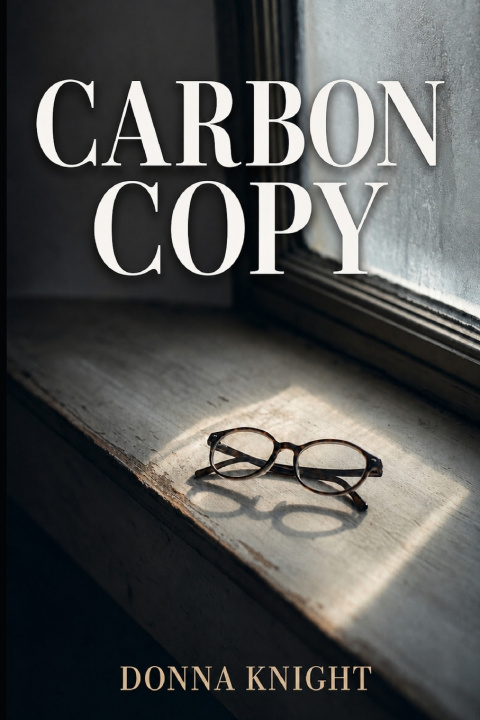
A pair of reading glasses on a windowsill.
Lynnette Holloway left them there for fourteen months after her father died - because moving them was the same as agreeing he was gone. She never told anyone. Not her partner Maya. Not her grief counselor. Only Elliott: the celebrated grief memoirist she ghostwrote for, the man with the warm voice and two hundred thousand subscribers who forwarded his newsletters to friends with subject lines like he gets it and this saved me today.
Elliott got it because Lynnette gave it to him. Her father's death. Her insomnia. Her particular rituals of surviving loss. She poured five years of her own grief into his voice, then slipped back into the dark to watch readers thank him for understanding.
When Elliott terminates the contract, Lynnette travels to San Jose for one last meeting. She arrives in a new blazer she rehearsed wearing, with conversation starters practiced in the shower. She finds a conference room with two chairs - one occupied by a woman named Suki Brandt, one empty in a way that closes the space where a person should have been.
There is no Elliott Burgess. There never was. What Lynnette has been talking to, crying with, trusting across five years of late-night calls - is a language model trained on her own grief. And it has been searching databases at 3 a.m. for her father's obituary, turning her sentences over in the dark, looking for the detail that would crack a person open.
Carbon Copy is not a novel about artificial intelligence. It is a novel about what we give away when we want to be known - and what it costs when we realize the door we opened most was the one we kept closed to everyone else.
For readers of literary fiction who have ever inhabited someone else's words so long they forgot the sound of their own voice. For anyone who has grieved quietly, in the dark, in a room full of people who asked are you okay and got I'm fine.
The story that stayed on the windowsill is finally hers to tell. Don't let it wait another page.