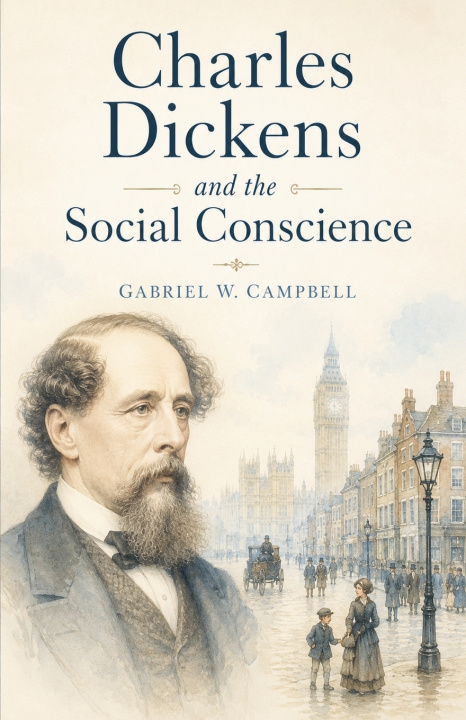
Charles Dickens stands as one of the rare writers whose name alone evokes not only a literary style but a moral atmosphere, a way of looking at society that insists on seeing the invisible, hearing the unheard, and remembering the forgotten. To speak of Dickens is to speak of a writer who transformed fiction into a vehicle of ethical inquiry, who made storytelling a form of public intervention, and who believed that the imagination could be a force for social repair. His novels, journalism, speeches, and philanthropic ventures all radiate from a central conviction: that literature can awaken a social conscience, a term that in Dickens's hands becomes neither abstract nor sentimental but grounded in the lived realities of poverty, injustice, and human resilience. This book is a sustained exploration of how Dickens forged, expressed, and disseminated that conscience across his life and works, and why his moral imagination continues to resonate in contemporary debates about inequality, compassion, and civic responsibility.