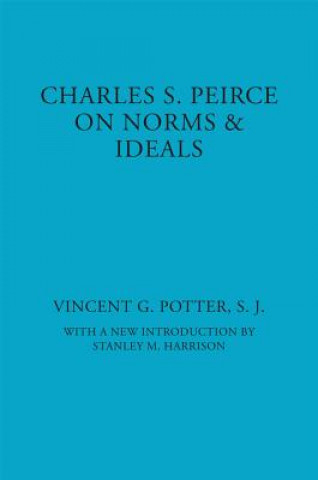
Könyv Charles S. Peirce Vincent G. Potter

Charles S. Peirce

On Norms and Ideals

Nyelv: Angol
Kötés: Puha kötésű
Elérhetőség: Beszállítói készleten
Küldés 8-11 napon belül
15 303 Ft
In recent years, Charles Sanders Peirce has emerged, in the eyes of philosophers both in America and...
Információk a könyvről

Nyelv
Angol
Kötés
Könyv - Puha kötésű
Kiadva
1996
oldal
229
EAN
9780823217106
ISBN
0823217108
Enbook ID
04940290
Súly
345
Méretek
152 x 229 x 16

Teljes leírás

In recent years, Charles Sanders Peirce has emerged, in the eyes of philosophers both in America and abroad, as one of America's major philosophical thinkers. His work has forced us back to philosophical reflection about those basic issues that inevitably confront us as human beings, especially in an age of science. Peirce's concern for experience, for what is actually encountered, means that his philosophy, even in its most technical aspects, forms a reflective commentary on actual life and on the world in which it is lived. In Charles S. Peirce: On Norms and Ideals, Potter argues that Peirce's doctrine of the normative sciences is essential to his pragmatism. No part of Peirce's philosophy is bolder than his attempt to establish esthetics, ethics, and logic as the three normative sciences and to argue for the priority of esthetics among the trio. Logic, Potter cites, is normative because it governs thought and aims at truth; ethics is normative because it analyzes the ends to which thought should be directed; esthetics is normative and fundamental because it considers what it means to be an end of something good in itself. This study shows that pierce took seriously the trinity of normative sciences and demonstrates that these categories apply both to the conduct of man and to the workings of the cosmos. Professor Potter combines sympathetic and informed exposition with straightforward criticism and he deals in a sensible manner with the gaps and inconsistencies in Peirce's thought. His study shows that Peirce was above all a cosmological and ontological thinker, one who combined science both as a method and as result with a conception of reasonable actions to form a comprehensive theory of reality. Peirce's pragmatism, although it has to do with action and the achievement of results, is not a glorification of action but rather a theory of the dynamic nature of things in which the ideal dimension of reality - laws, nature of things, tendencies, and ends - has genuine power for directing the cosmic order, including man, toward reasonable goals.

Érdekelheti

11 027 Ft

Course in General Linguistics

Ferdinand de Saussure
10 616 Ft
6 500 Ft

Mapping Humanity

Joshua Z. Rappoport
5 379 Ft
5 736 Ft
3 170 Ft

Joy at Work

Scott Sonenshein
7 062 Ft

Eight Dates

Dr John Gottman
5 080 Ft

Spacetime and Geometry

Sean M. Carroll
28 455 Ft

The Art of Starving

Sam J. Miller
3 013 Ft
8 353 Ft

The King in Yellow

Robert W Chambers
2 817 Ft

Wildlife Gardening

BRADBURY KATE
7 107 Ft
5 946 Ft

Area of Darkness

V. S. Naipaul
5 308 Ft