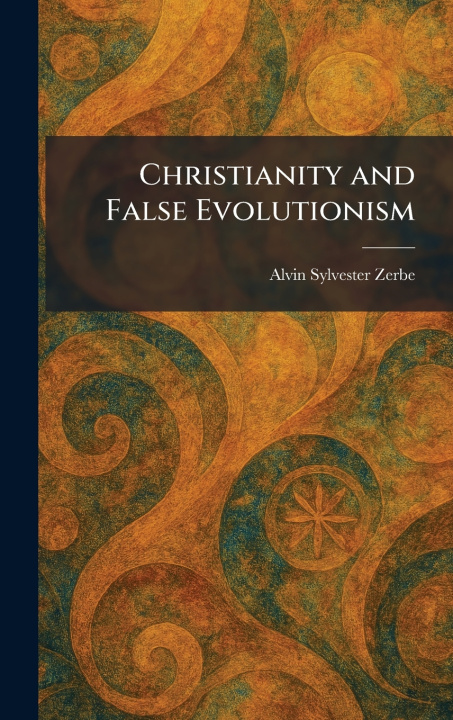
"Christianity and False Evolutionism" explores the complex and often contentious relationship between traditional Christian doctrine and the scientific theories of evolution emerging in the early twentieth century. Written by Alvin Sylvester Zerbe, this work provides a rigorous defense of orthodox faith against what the author characterizes as the encroaching influence of materialistic and purely naturalistic worldviews. Zerbe meticulously examines the philosophical underpinnings of Darwinian thought, arguing that many scientific assertions of his era overstepped their empirical bounds to conflict with the biblical account of creation and the unique nature of humanity.
The book serves as a significant contribution to the fundamentalist-modernist controversy, offering a detailed critique of both radical evolution and the attempts to harmonize it through theistic evolution. Zerbe addresses foundational topics such as the origin of life, the development of the soul, and the sovereignty of God as the ultimate architect of the universe. By contrasting scriptural authority with the speculative elements of modern science, "Christianity and False Evolutionism" seeks to provide a reasoned and scholarly apologetic for believers. It remains an essential resource for those interested in the historical development of American theological thought and the ongoing dialogue between faith and science.
This work has been selected by scholars as being culturally important, and is part of the knowledge base of civilization as we know it. This work was reproduced from the original artifact, and remains as true to the original work as possible. Therefore, you may see the original copyright references, library stamps (as most of these works have been housed in our most important libraries around the world), and other notations in the work.
This work is in the public domain in the United States of America, and possibly other nations. Within the United States, you may freely copy and distribute this work, as no entity (individual or corporate) has a copyright on the body of the work.
As a reproduction of a historical artifact, this work may contain missing or blurred pages, poor pictures, errant marks, etc. Scholars believe, and we concur, that this work is important enough to be preserved, reproduced, and made generally available to the public. We appreciate your support of the preservation process, and thank you for being an important part of keeping this knowledge alive and relevant.