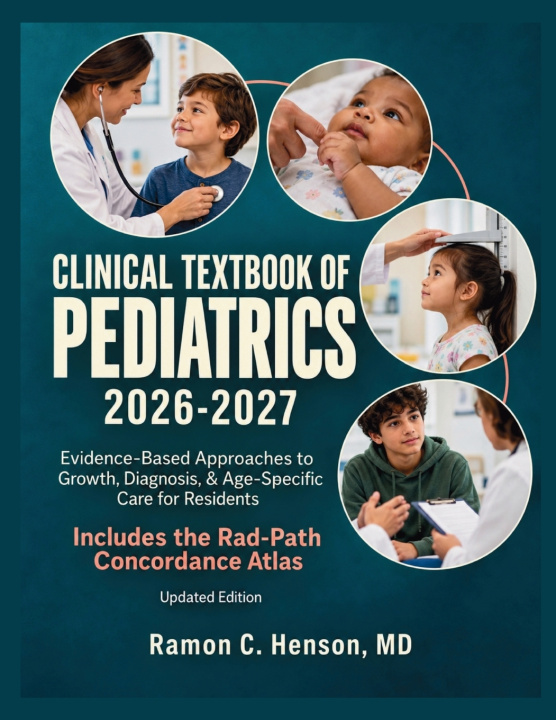
Age-Adjusted Reasoning From First Impression to Safe Disposition
Clinical Textbook of Pediatrics 2026-2027 connects developmental physiology, presenting patterns, targeted evaluation, treatment, and disposition across newborn, childhood, and adolescent care. Written for residents and frontline clinicians, it moves from preventive health and acute stabilization through organ-system disease, behavior, mental health, critical illness, and complex care.
The Pediatric Presentation-to-Plan Compass keeps each encounter oriented around the presentation signature, age pivot, danger signals, diagnostic path, and management anchor. Narrative cases, native comparison tables, numbered decision pathways, and detailed visual prompts reinforce practical reasoning without interrupting the flow of the core chapters.
Use the book to strengthen these point-of-care capabilities:
Growth, development, nutrition, screening, and immunization - interpret trajectories and intervene before preventable harm becomes established
Newborn transition, prematurity, jaundice, and infection - recognize age-specific instability and organize safe follow-up
Shock, respiratory failure, neurologic decline, poisoning, and trauma - prioritize stabilization while preserving diagnostic clarity
Respiratory, cardiovascular, gastrointestinal, renal, endocrine, hematologic, neurologic, and dermatologic disorders - connect mechanisms to bedside patterns
Genetic, metabolic, immune, rheumatologic, and oncologic disease - identify multisystem clues and coordinate focused evaluation
Developmental, behavioral, adolescent, and mental health care - integrate confidentiality, function, safeguarding, and family partnership
Complex, global, transitional, and palliative care - align treatment with equity, caregiver capacity, quality of life, and continuity
Build a reliable pediatric reasoning framework for everyday care, urgent decisions, and long-term clinical growth.