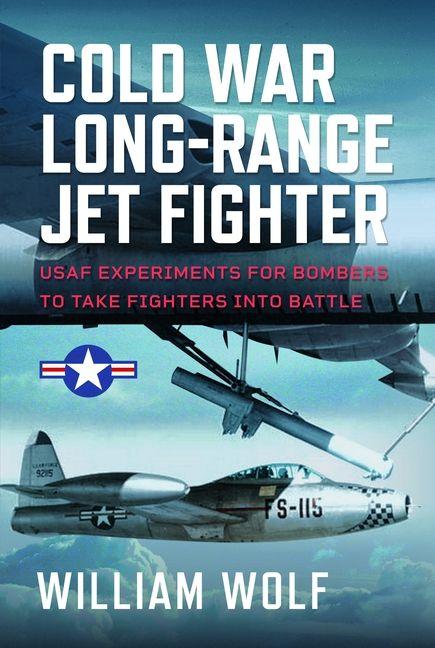
Könyv Cold War Long-Range Jet Fighter Program William Wolf

Cold War Long-Range Jet Fighter Program

USAF Experiments for Bombers to Take Fighters into Battle

Szerző: William Wolf
Nyelv: Angol
Kötés: Kemény kötésű
Elérhetőség: Könyvújdonság
Küldés 30. 10. 2026
11 942 Ft
After the Second World War, the introduction of the six-engine Consolidated-Vultee B-36 Peacemaker b...
Információk a könyvről

Szerző
Nyelv
Angol
Kötés
Könyv - Kemény kötésű
Kiadva
2026
oldal
320
EAN
9781036196080
Enbook ID
52451533
Méretek
156 x 234

Teljes leírás

After the Second World War, the introduction of the six-engine Consolidated-Vultee B-36 Peacemaker bomber, capable of intercontinental ranges of 5,000 miles or more, reignited the long-standing problem of fighter escort. Early-generation US jet fighters consumed enormous amounts of fuel and lacked the endurance to accompany the B-36 over extended distances. Designing a jet fighter with enough fuel capacity for such missions would result in an aircraft far too large and unwieldy to engage smaller, more agile enemy interceptors effectively. In response, during the early Cold War, the United States Air Force explored two experimental methods to extend fighter range. The first was wingtip-to-wingtip towing, in which a fighter would attach itself to the bomber’s wing for fuel support. The second involved carrying a fighter inside the bomber’s bomb bay on a trapeze mechanism, allowing it to be launched and later recovered in flight. Because the B-36 faced developmental delays, the widely available Boeing B-29 Superfortress initially served as the test platform. Boeing ETB-29A bombers were paired with Republic EF-84D Thunderjet fighters, which practiced attaching and detaching from the B-29 wingtips. Following these early trials, the concept of the bomb-bay-mounted ‘parasite’ fighter resurfaced with the diminutive, jet-powered XP-85 Goblin. Designed exclusively as a parasite aircraft, the Goblin could launch from the B-36 to intercept enemy aircraft and later dock again in midair. Despite promising test flights, docking challenges and the Goblin’s underwhelming performance relative to enemy jets led to cancellation. In 1952–53, the FICON (FIghter CONveyor) program tested carrying an RF-84F/K Thunderflash inside the B-36’s trapeze-equipped bomb bay. While escort missions were initially envisioned, the program shifted toward tactical reconnaissance and strike missions. The B-36 would deliver the faster, more agile fighter near a target for reconnaissance or nuclear strike, then recover it afterward. The success of the U-2 spy plane and midair refueling ultimately rendered parasite aircraft experiments obsolete. Packed with over 150 photographs, this book is the first to examine this extraordinary and unusual chapter in Cold War aviation history, highlighting some of the most inventive and unconventional experiments ever attempted.

Érdekelheti

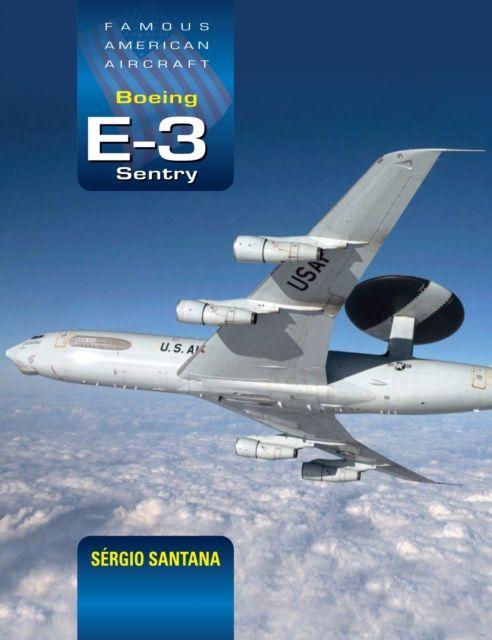
Boeing E-3 Sentry

Sergio Santana
16 867 Ft
103 023 Ft
6 814 Ft
6 431 Ft

Philippines 1941-42

Gareth Hector
6 814 Ft

The Lockheed U-2

Ken Neubeck
10 654 Ft

Through the Yellow Visor

E. Vincent "Jell-O" Aiello
8 300 Ft

The Magic Word

W. D. Gann
5 409 Ft
6 300 Ft
31 909 Ft

Startupland

Mikkel Svane
8 463 Ft

Complex Networks XII

Andreia Sofia Teixeira
63 236 Ft

Azok a vásárlók, akik ezt a könyvet megvásárolták, a következőket is megvásárolták