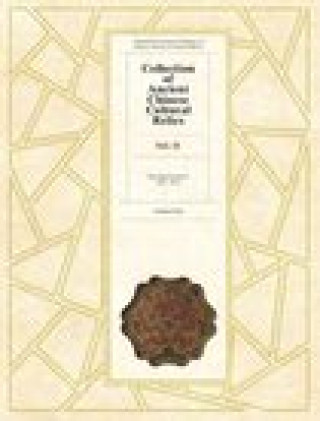
Könyv Collection of Ancient Chinese Cultural Relics Volume 9 Wang Guozhen

Collection of Ancient Chinese Cultural Relics Volume 9

Szerző: Wang Guozhen
Nyelv: Angol
Kötés: Kemény kötésű
Kiadó: ATF Press
Elérhetőség: Beszállítói készleten alacsony példányszámban
Küldés 11-15 napon belül
23 336 Ft
This book, a collection of ancient Chinese cultural relics, deals with relics from Qing Dynasty, 164...

Információk a könyvről

Szerző
Nyelv
Angol
Kötés
Könyv - Kemény kötésű
Kiadva
2020
oldal
320
EAN
9781925371598
ISBN
192537159X
Enbook ID
35461064
Kiadó
Súly
564

Teljes leírás

This book, a collection of ancient Chinese cultural relics, deals with relics from Qing Dynasty, 1644 to 1911. There are two volumes dealing with relics in this period. This book contains 377 relics. The ancestors of the people who established the Manchu Qing Dynasty lived in northeast China in the territory lying between the ''white mountains and the black rivers''. After establishing their capital in Beijing. the Qing Dynasty defeated all the forces that opposed them and they quickly consolidated their frontier defences. in the nearly 300 years of the Qing Dynasty, China achieved some remarkable things especially in the fields of culture and art even though it lagged behind in many other respects in global terms. Jade ware reached a great peak in the mid Qing Dynasty and surpassed previous achievement in size, selection of materials and overall craftsmanship. Porcelain production reached its highest ever peak in this era. Jingdezhen remained the centre for production of porcelain. The period also saw the revival in the history of Chinese calligraphy. Stone inscriptions grew in popularity and a number of pioneer masters emerged and exerted a far-reaching influence. Seal character calligraphy and li calligraphy (official script) were revised again. Literati painting played a dominant role and landscape painting and impressionistic ink and wash painting were prevalent Laquer craftwork in all shapes and sizes reached a great deal level of maturity. Existing techniques were improved and others developed. Embroidery reached unprecedented heights. Silk tapestries became more and more exquisite and the production of metal bodied enamelware reached a great peak. Bamboo wood and horn carvings also were developed. Jade objects went through three stages of development. 1. Frugal period, with jade production was small and made by ordinary craftsmen and lack originality. 2. Due to a growing Qing comic strength. and a plentiful supply of jade materials the jade industry began to flourish, and became one of the high points in jade carving in China. 3. Late period of the Qing Dynasty and due to increasing corruption in society and large number of difficulties, both domestic and external, there was less appetite for large scale pieces of jade in part also due to the high cost of production. This book, the ninth in a ten-volume collection, brings to the English-speaking world a series of books from China which has been complied by an Expert Committee of the Chinese Society of Cultural Relics. There are 377 descriptions.

Érdekelheti

JEDEM KIND EIN INSTRUMENT

WALTER ST MENGLER
9 501 Ft
17 141 Ft

Queen of Arts

Laura Callaghan
5 563 Ft

Azok a vásárlók, akik ezt a könyvet megvásárolták, a következőket is megvásárolták

6 985 Ft

Opere

Charles S. Peirce
46 451 Ft
9 588 Ft