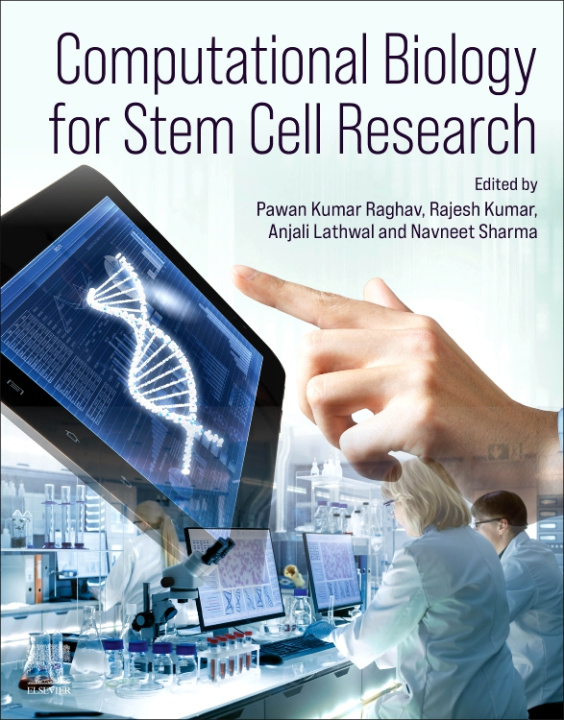
Computational Biology for Stem Cell Research is an invaluable guide for researchers as they explore HSCs and MSCs in computational biology. With the growing advancement of technology in the field of biomedical sciences, computational approaches have reduced the financial and experimental burden of the experimental process. In the shortest span, it had established itself as an integral component of any biological research activity. The HSC informatics (in silico) techniques such as machine learning, genome network analysis, data mining, complex genome structures, docking, system biology, mathematical modeling, programming (R, Python, Perl, etc.) help to analyze, visualize, network constructions, and protein-ligand or protein-protein interactions. Computational Biology for Stem Cell Research is aimed at beginners with an exact correlation between the biomedical sciences and in silico computational methods for HSCs transplantation and translational research and provides an insight into the methods targeting HSCs properties like proliferation, self-renewal, differentiation, and apoptosis. The readers will be familiar with the basic knowledge on the HSCs based bioinformatics approaches for the biomedical sciences. These in silico techniques are correlative and can be effectively incorporated into the conventional in vitro and in vivo strategies to test the biological theory. Presents modeling of stem cell behavior studies with animal models before correlating to clinical allogeneic hematopoietic stem cell transplantation (HSCT) scenarios Offers advances in bioinformatics based translational research from bench to bedside A single resource providing basic information about computational tools necessary for those in the fields of biomedical scienced, life sciences and chemistry