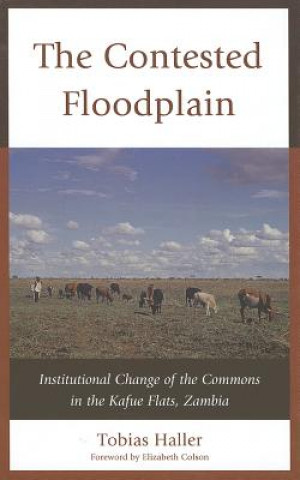
Könyv Contested Floodplain Tobias Haller

Contested Floodplain

Institutional Change of the Commons in the Kafue Flats, Zambia

Szerző: Tobias Haller
Nyelv: Angol
Kötés: Kemény kötésű
Kiadó: Lexington Books
Elérhetőség: Beszállítói készleten
Küldés 10-18 napon belül
71 205 Ft
The Contested Floodplain tells the story of institutional changes in the management of common pool r...
Információk a könyvről

Szerző
Nyelv
Angol
Kötés
Könyv - Kemény kötésű
Kiadva
2012
oldal
576
EAN
9780739169568
ISBN
0739169564
Enbook ID
04669380
Súly
938
Méretek
237 x 160 x 40

Teljes leírás

The Contested Floodplain tells the story of institutional changes in the management of common pool resources (pasture, wildlife, and fisheries) among Ila and Balundwe agro-pastoralists and Batwa fishermen in the Kafue Flats, in southern Zambia. It explains how and why a once rich floodplain area, managed under local common property regimes, becomes a poor man's place and a degraded resource area. Based on social anthropological field research, the book explains how well working institutions in the past, regulating communal access to resources, have turned into state property and open access or privatization. As a basis for analysis, the author uses Elinor Ostrom's design principles for well working institutions and the approach of the New Institutionalism by Jean Ensminger. The latter approach focuses on external factors and change in relative prices. It explains how local actors face changing bargaining power and use different ideologies to legitimize and shape resource use regulations. The study focuses on the historic developments taking place since pre-colonial and colonial times up to today. Haller shows how the commons had been well regulated by local institutions in the past, often embedded in religious belief systems. He then explains the transformation from common property to state property since colonial times. When the state is unable to provide well functioning institutions due to a lack in financial income, it contributes to de facto open access and degradation of the commons. The Zambian copper-based economy has faced crisis since 1975, and many Zambians have to look for economic alternatives and find ways to profit from the lack of state control (a paradox of the present-absent state). And while the state is absent, external actors use the ideology of citizenship to justify free use of resources during conflicts with local people. Also within Zambian communities, floodplain resources are highly contested, which is illustrated through conflicts over a proposed irrigation scheme in the area. The different actors and interest groups use ideologies such as citizenship vs. being indigenous, ethnic identity vs. class conflict, and modernity vs traditional way of life to legitimize land claims.
Érdekelheti

Mortal Kombat

Martin Hunter
5 463 Ft
3 994 Ft

The Bucket List

Kath Stathers
9 377 Ft

Falling Hard

Lexi Ryan
5 477 Ft
14 431 Ft
7 146 Ft

Maria Or The Wrongs Of Woman

Mary Wollstonecraft
3 994 Ft
19 444 Ft

Failure to Launch

MCCONVILLE MARK
5 111 Ft
2 413 Ft

Handbook of the Law of Torts

Heman Gerald Chapin
11 986 Ft

On the Footsteps of Buddha

Sunita Pant Bansal
6 171 Ft
3 994 Ft
23 483 Ft

Azok a vásárlók, akik ezt a könyvet megvásárolták, a következőket is megvásárolták

Kitoweo cha Samaki

Nyambura Mpesha
5 730 Ft

Emilie Mayer

Barbara Beuys
6 991 Ft
29 903 Ft