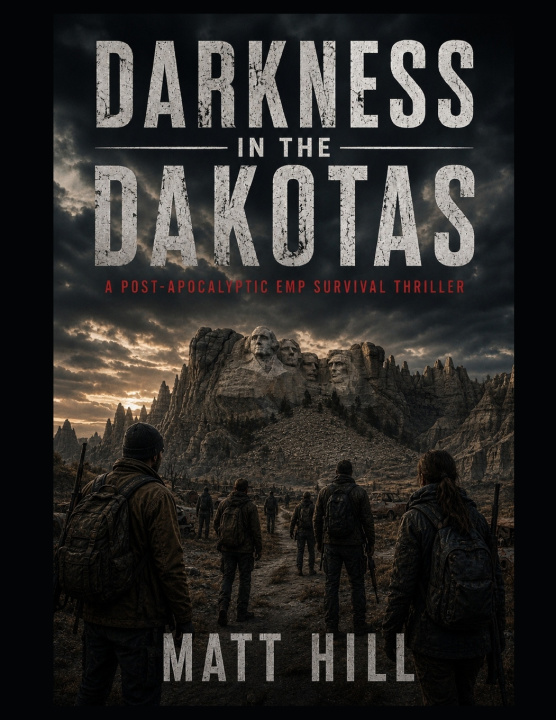
Cooper Feldman was holding a glass of water when the refrigerator stopped humming. That was how the world ended. Not with a bang, with a hum stopping. Every light on the street died in the same instant. His father's truck sat dead in the driveway. And three hours later the southern sky lit up over Wichita in a swelling orange false dawn, and Cooper understood the whole terrible shape of it.
EMP first. Then the missiles, hunting every city worth a warhead. Then the slow dying that killed the country, the part nobody survived who hadn't seen it up close. The hospitals going dark. The taps running dry. His father dead by day eleven from a scratch that turned black, because America had run out of doctors and antibiotics and everything else, all at once, forever.
So Cooper buried his father in the backyard and started walking north.
Everyone said the same thing on the dead roads, in the gas stations full of the dying. Go to the Dakotas. Nothing up there was worth a bomb. The empty top of the map, all grass and cattle and small towns nobody in Washington or Moscow ever bothered to think about. It's the last place the fire didn't reach.
Three hundred miles later, starving and half feral, Cooper follows a rumor into the Black Hills, up under the four stone faces of Mount Rushmore, where survivors have gathered and built something real. Food. Water. Walls. Living, laughing, working people, the first he's seen in weeks.
And he makes one mistake. He walks in trusting.
Because the last good place in America has a king. Steven Timber is big and warm and always smiling, and the smile never once reaches his eyes. He wants every gun in camp counted and written down, for everyone's safety, of course. He calls a woman his the way another man calls a can of beans his. And up in the pines above the water barrel, where he tells everyone not to go, the ground has been turned in six fresh places, and the camp bookkeeper has counted nine people walked out to the tree line who never came back.
Steven has already decided what Cooper is. The one thing he cannot allow in his kingdom. A man who will not kneel.
But here is the trap, the real one, deeper than any grave: you cannot free people who are happy. How do you save a whole camp that is warm and fed and singing, and grateful to the very man quietly burying anyone who crosses him?