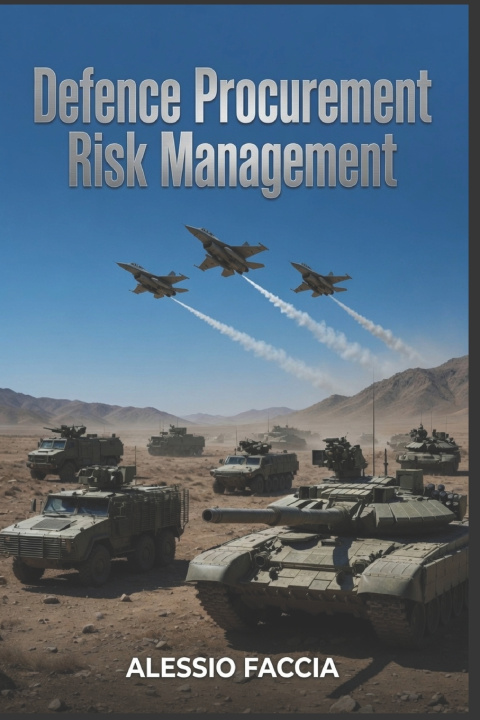
Defence Procurement Risk Management is a practical and authoritative guide for professionals who need to understand how military acquisition, public procurement governance, supplier assurance, contract control, and lifecycle readiness operate in high-risk defence environments.
Defence procurement differs from ordinary purchasing. It involves national security, classified information, cyber exposure, export controls, political accountability, high-value contracts, limited supplier markets, urgent operational needs, and long-term sustainment obligations. A poor procurement decision can create cost overruns, delivery delays, supplier dependency, weak capability, audit findings, legal challenge, and readiness failure.
This book provides a structured framework for managing risk across the full defence acquisition lifecycle, from need definition and procurement strategy to tendering, evaluation, contracting, delivery, acceptance testing, sustainment, internal audit, and future digital procurement. It examines how defence organisations can define requirements, build accountable governance, screen suppliers, manage conflicts of interest, prevent fraud, control variations, test delivery evidence, protect classified information, and maintain operational capability after contract award.
The book covers key defence procurement risk areas, including:
Governance, accountability, delegation of authority, and approval rights
Risk appetite, risk registers, control ownership, and escalation protocols
Supplier due diligence, beneficial ownership, sanctions screening, and conflict checks
Market risk, single-source dependency, industrial capacity, and fragile supply chains
Financial stability, cost overruns, price escalation, currency exposure, and budget control
Anti-bribery controls, fraud prevention, bid rigging, collusion, and procurement integrity
Export controls, classified information, cybersecurity, data protection, and security clearance
Tender design, weighted scoring, value for money, and audit trails
Contract models, payment terms, milestones, penalties, warranties, and performance guarantees
Change management, variation orders, claims, delays, disputes, and termination rights
Acceptance testing, quality assurance, inspection, delivery evidence, and operational handover
Technology risk involving interoperability, obsolescence, AI systems, drones, software, and classified platforms
Lifecycle costing, maintenance, spare parts, training, upgrades, and sustainment planning
Third-party assurance, internal audit testing, red flags, exception reporting, and corrective action plans
Digital procurement, real-time monitoring, defence data analytics, and resilient supply chains
Written for procurement officers, defence officials, military contract managers, auditors, risk professionals, finance leaders, legal advisers, compliance specialists, consultants, suppliers, researchers, and postgraduate students, this book connects procurement governance with mission readiness. It explains why contract award is not the end of acquisition success. True success occurs when the purchased capability works safely, securely, lawfully, affordably, and reliably in operational conditions.
The book is especially useful for readers interested in defence acquisition, military procurement, government contracting, public-sector risk management, supplier assurance, procurement fraud prevention, defence audit, contract management, cybersecurity in procurement, and lifecycle capability planning.
Defence Procurement Risk Management gives readers a professional reference for building procurement systems that protect public funds, strengthen accountability, reduce supplier risk, improve contract performance, and support national security outcomes.