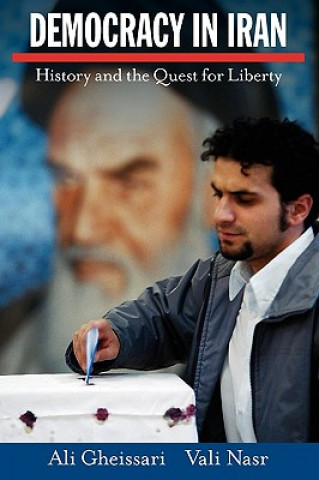
Könyv Democracy in Iran Ali Gheissari

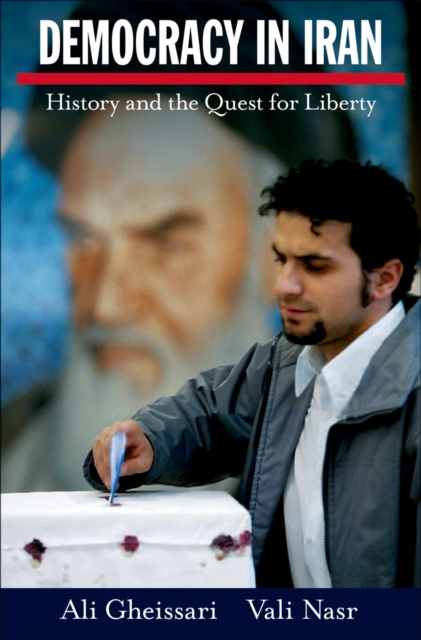
Democracy in Iran

History and the Quest for Liberty

Nyelv: Angol
Kötés: Puha kötésű
Elérhetőség: Beszállítói készleten
Küldés 10-18 napon belül
13 115 Ft
Today Iran is once again in the headlines. Reputed to be developing nuclear weapons, the future of I...
Információk a könyvről

Nyelv
Angol
Kötés
Könyv - Puha kötésű
Kiadva
2009
oldal
232
EAN
9780195396966
ISBN
0195396960
Enbook ID
09284199
Súly
362
Méretek
230 x 153 x 19

Teljes leírás

Today Iran is once again in the headlines. Reputed to be developing nuclear weapons, the future of Iraq's next-door neighbor is a matter of grave concern both for the stability of the region and for the safety of the global community. President George W. Bush labeled it part of the "Axis of Evil," and rails against the country's authoritarian leadership. Yet as Bush trumpets the spread of democracy throughout the Middle East, few note that Iran has one of the longest-running experiences with democracy in the region. In this book, Ali Gheissari and Vali Nasr look at the political history of Iran in the modern era, and offer an in-depth analysis of the prospects for democracy to flourish there. After having produced the only successful Islamist challenge to the state, a revolution, and an Islamic Republic, Iran is now poised to produce a genuine and indigenous democratic movement in the Muslim world. Democracy in Iran is neither a sudden development nor a western import, Gheissari and Nasr argue. The concept of democracy in Iran today may appear to be a reaction to authoritarianism, but it is an old idea with a complex history, one that is tightly interwoven with the main forces that have shaped Iranian society and politics, institutions, identities, and interests. Indeed, the demand for democracy first surfaced in Iran a century ago at the end of the Qajar period, and helped produce Iran's surprisingly liberal first constitution in 1906. Gheissari and Nasr seek to understand why democracy failed to grow roots and lost ground to an autocratic Iranian state. Why was democracy absent from the ideological debates of the 1960s and 1970s? Most important, why has it now become a powerful social, political, and intellectual force? How have modernization, social change, economic growth, and the experience of the revolution converged to make this possible?

Érdekelheti

Democracy in Iran

Ali Gheissari
7 142 Ft
9 649 Ft

Virtue of Endurance

Nathan L. King
12 899 Ft

Early Puberty

Claire Bouvattier
38 853 Ft

Model Home

Eric Puchner
5 577 Ft
65 965 Ft

South Boston

Anthony Mitchell Sammarco
9 588 Ft

Transactions

Rhinological A. American Laryngological
13 877 Ft
2 927 Ft
3 001 Ft

Islamic Leviathan

Seyyed Vali Reza Nasr
43 815 Ft
4 713 Ft

Slay

Laurell K. Hamilton
6 366 Ft
19 062 Ft

Baron's Cloak

Willard Sunderland
15 955 Ft

Genetics of Melanoma

Carlos A. Torres-Cabala
39 642 Ft
14 173 Ft
11 564 Ft

Berserk Volume 1

Kentaro Miura
4 524 Ft

Azok a vásárlók, akik ezt a könyvet megvásárolták, a következőket is megvásárolták

Die Sonnenstadt

Tommaso Campanella
1 916 Ft
41 955 Ft

Curso de SQL

CARMEN MARTINEZ
11 772 Ft

OEuvres

François Villon
13 586 Ft

R++ngest (Split EP)

The Cult Of Luna/Old Wind
6 837 Ft

Sprache der Kossaer

Friedrich Delitzsch
10 378 Ft