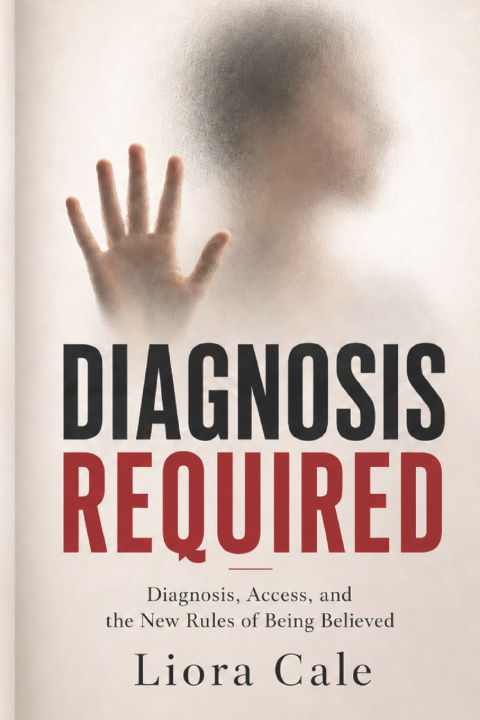
What if getting help now means proving what is wrong with you first?
A child can need support long before the assessment is complete. A worker can know exactly what would help, but still need documentation before anyone changes the conditions. A patient can wait in the space between distress and official recognition. An adult can spend years being called difficult, lazy, dramatic, fragile, or strange before the right name finally makes the past make sense.
Diagnosis can be life-changing. It can bring relief, treatment, protection, language, community, and dignity.
But modern society has made diagnosis do too much work.
In Diagnosis Required, Liora Cale examines one of the defining tensions of contemporary life: the growing gap between what people need and what institutions are willing to recognize.
From mental health pathways and ADHD assessments to autism diagnosis, school support, workplace accommodations, private evaluations, self-diagnosis, online identity, skepticism, and waiting lists, this book reveals how formal labels have become one of the hidden access systems of modern life.
This is not a book against diagnosis.
It is a book about what happens when diagnosis becomes the gate through which people must pass before care, credibility, flexibility, or support can begin.
Sharp, humane, and deeply timely, Diagnosis Required asks a question that reaches far beyond medicine:
Why do so many people have to prove what is wrong with them before anyone asks what would help?
For readers interested in psychology, culture, mental health, neurodivergence, disability, work, education, and the systems that decide whose needs count, this book offers a powerful new way to understand the new rules of being believed.