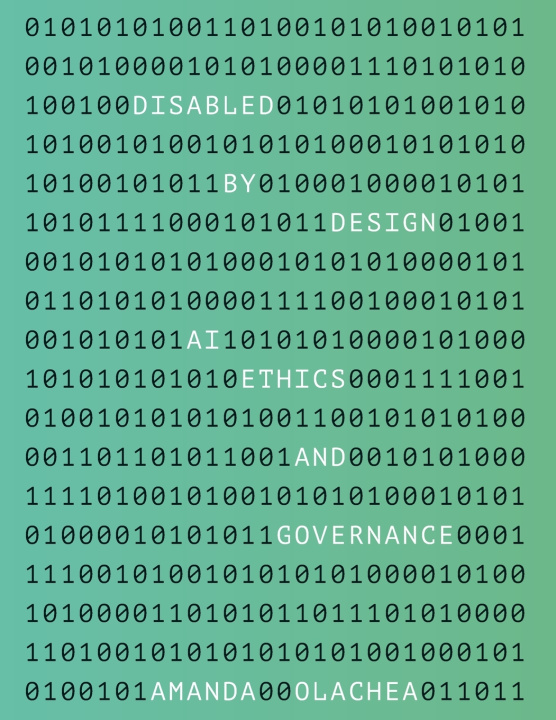
Disabled by Design examines how automated systems and AI-driven processes quietly exclude disabled people, not through obvious intent, but through assumptions built into design, data, rules, and institutional workflows. From rigid forms and documentation demands to automated eligibility checks and inaccessible digital pathways, the book shows how systems that claim to be neutral often shift the burden of failure onto the people least served by them.
Amanda Olachea argues that disabled people are not edge cases in automated systems. They are proof points. Their experiences reveal where technology becomes too brittle, too standardized, and too disconnected from real human variation. Drawing on themes of AI ethics, accessibility, governance, and institutional accountability, Disabled by Design challenges the idea that fairness can be measured only after a system is deployed. Ethical AI must be built, audited, and governed from the beginning.
This book is not an argument against automation. It is a demand for better systems: systems that treat equity as a performance metric, accessibility as infrastructure, and disabled people as central to ethical design.