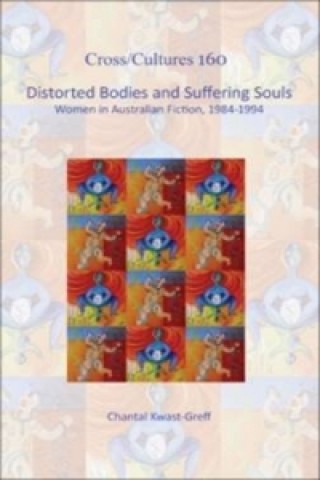
Chaos. Pain. Self-mutilation. Women starve themselves. They burn or slash their own flesh or their babies' throats, and slam their newborns against walls. Their bodies are the canvases on which the suffering of the soul carves itself with knife and razor. In Australian fiction written by women between 1984 and 1994, female characters inscribe their inner chaos on their bodies to exert whatever power they have over themselves. Their self-inflicted pain is both reaction and language, the bodily sign not only of their enfeeblement but also to a certain extent of their empowerment, of themselves and their world. The texts considered in this book - chiefly by Margaret Coombs, Kate Grenville, Fiona Place, Penelope Rowe, Leone Sperling, and Amy Witting - function as both defiance and ac--ceptance of prevailing discourses of femininity and patriarchy, between submission and a possible future. The narratives of anorexia, bulimia, fatness, self-mutilation, incest, and murder shock the reader into an understanding of deeper meanings of body and soul, and prompt a tentative interpretation of fiction in relation to the world of 'real' women and men in contemporary (white) Australia.
This is affective literature with the reader in voyeuristic complicity. Holding up the mirror of fiction, the women writers act perforce as a social lever, their narratives as Bildungsromane. But there is a risk, that of reinforcing stereotypes and codes of conduct which, supposedly long gone, still represent women as victims. Why are the female characters (self-)destroyers and victims? Why are they not heroes, saviours or conquerors? If women read about women / themselves and feel pity for the Other they read about, they will also feel pity for themselves: there is little happiness in being a woman. But infanticide and distorting the body are problem-solving behaviours. In truth, the bodies of the female characters bear the marks and scars of the history of their mothers and the history of their grandmothers - indeed, that of their own: the history of survivors.