Könyv Divine Providence in Philo of Alexandria Peter Frick

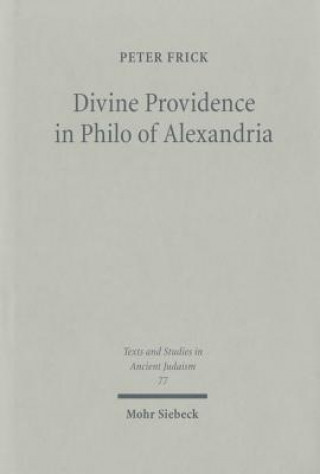
Divine Providence in Philo of Alexandria

Szerző: Peter Frick
Nyelv: Angol
Kötés: Kemény kötésű
Elérhetőség: 50 % esély
Keressük az egész világon
51 294 Ft
In his study Peter Frick starts with the examination of the theocentric structure of Philo's thought...

Információk a könyvről

Szerző
Nyelv
Angol
Kötés
Könyv - Kemény kötésű
Kiadva
1999
oldal
233
EAN
9783161471414
ISBN
3161471415
Enbook ID
12572128
Súly
533
Méretek
161 x 240 x 22

Teljes leírás

In his study Peter Frick starts with the examination of the theocentric structure of Philo's thought as outlined in the important passage De Opificio Mundi 171-2 where Philo correlates the idea of providence with his concept of God and the theory of creation. On this basis, any adequate understanding of providence in Philo must begin with the correlation between the formal aspects of the Philonic concept of God, especially the idea of God's transcendence, and Philo's conceptualization of the idea of providence in light of these formal aspects. In particular, the issue is how Philo can predicate that God is provident in nature, although God cannot be apprehended in his essence. Moreover, Philo explains the immanence of God in the cosmos in terms of the Logos and the divine powers, one of which he specifically characterizes as the providential power. Both the aspects of divine transcendence and immanence cohere in Philo's theory of creation. He conceives of the role of providence in cosmological matters as being responsible for the design, administration and continuous existence of the created universe. Two further issues, the questions of astral fatalism and theodicy, are critically important for a thorough understanding of Philo's conception of divine providence. Philo rejects the assumption implied in astral fatalism that the stars are transcendent divinities and thus have causal powers over human affairs. And he rejects astral fatalism because it renders absurd the notion of moral responsibility. Concerning the question of theodicy, Philo proceeds from the Platonic premise that God is not the cause for evil in any way. For him, the existence of moral evil exonerates God and his providence as the cause for evil and anchors the blame in the person.

Érdekelheti

Giganotosaurus

James Keuther
12 753 Ft
2 924 Ft

Lonely Planet Rome

Lonely Planet
9 229 Ft
6 669 Ft

Pursuit

Gene Hackman
3 275 Ft

Water-Method Man

John Irving
5 235 Ft

Jesus

A. N. Wilson
7 869 Ft
12 901 Ft

Azok a vásárlók, akik ezt a könyvet megvásárolták, a következőket is megvásárolták

Verhandlungen des Vereins zur Beförderung des Gartenbaues in den Königlich Preussischen Staaten Volume Bd.12 1837

Verein zur Beförderung des Gartenbaues in den Königlich Preussischen Staaten
8 939 Ft

Delaissee

Meaulle-F
8 482 Ft
5 295 Ft
5 295 Ft

De l

Philippe Besson
3 556 Ft

Illusions auditives

Encyclopaedia Universalis
2 837 Ft

in alto! Livello A2

Fiorenza Quercioli
17 725 Ft
7 707 Ft
29 634 Ft