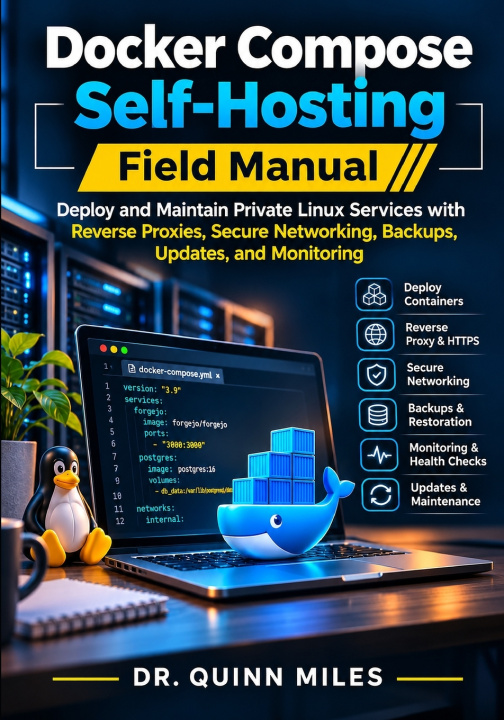
Want to run your own private applications but feel overwhelmed by Docker, Linux commands, and server security?
You can start without previous Docker experience or an advanced technical background. Docker Compose Self-Hosting Field Manual guides you through building a practical Linux self-hosting environment, one manageable step at a time. Clear explanations, short command sequences, and simple checks help you understand not just what to do, but why it works.
Follow one connected project from preparing an Ubuntu server to deploying applications with Docker Compose, setting up secure access, protecting data, and maintaining services over time. Configuration mistakes and failed connections become opportunities to troubleshoot, learn, and grow more confident.
Key FeaturesBeginner-friendly progression: Start with Linux server basics and build toward reliable self-hosting.
Real-world project: Deploy a private Git service using Forgejo and PostgreSQL.
Security built in: Configure Caddy, HTTPS, WireGuard, SSH access, private networks, and protected secrets.
Operations that matter: Practice backups, restoration, safe updates, monitoring, and recovery.
Useful references: Return to command summaries, troubleshooting guidance, and maintenance checklists.
What You Will LearnPrepare and secure an Ubuntu Linux server.
Install Docker Engine and manage services with Docker Compose.
Set up container networking, environment settings, secrets, and persistent volumes.
Provide private application access through a reverse proxy, DNS, HTTPS, and VPN.
Create encrypted backups and test restoration procedures.
Monitor service health, investigate failures, and plan controlled updates.
Who This Book Is ForNew Docker users, self-hosting enthusiasts, aspiring Linux administrators, and developers who want to manage private services. No previous Docker experience is required; basic computer familiarity and a willingness to use the Linux terminal are helpful.
Table of ContentsPlanning a Reliable Linux Self-Hosting Environment
Docker Engine and Docker Compose Foundations
Deploying Persistent Self-Hosted Applications
Reverse Proxies, DNS, and HTTPS
Securing Linux Hosts and Container Networks
Persistent Storage, Backups, and Restoration
Updates, Maintenance, and Lifecycle Management
Monitoring, Logging, and Operational Visibility
Troubleshooting and Recovering Self-Hosted Services
Operating a Production-Oriented Self-Hosting Platform
Build your first dependable self-hosting environment with a guide you can return to whenever you deploy, secure, or maintain a service. Get started today.