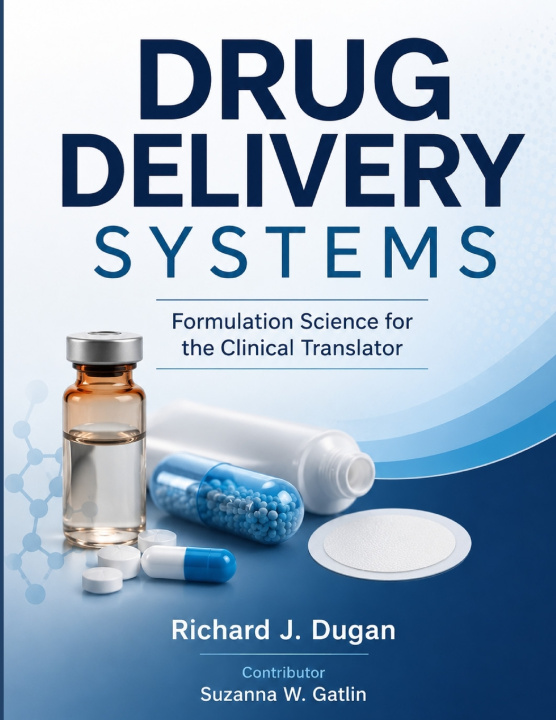
Drug delivery is where a promising molecule becomes a usable medicine.
This professional textbook gives readers a structured way to understand how formulation choices shape absorption, release, stability, pharmacokinetics, manufacturing quality, and regulatory translation. Designed for pharmacy students, pharmaceutical science graduates, researchers, and industry formulators, Drug Delivery Systems connects physicochemical principles with real clinical development logic across oral, injectable, transdermal, pulmonary, ocular, mucosal, nanoparticle, liposomal, biologic, nucleic acid, implantable, and smart platforms.
Rather than treating dosage forms as isolated products, this text follows the full translational chain: molecular properties, carrier selection, release mechanisms, biological barriers, plasma concentration profiles, quality attributes, manufacturing controls, and regulatory evidence. The result is a practical reference for readers who need to understand not only how a delivery platform is built, but why it performs the way it does in development and clinical use.
Inside, you will:
- Build a practical foundation in solubility, dissolution, BCS classification, polymer materials, excipient function, and stability.
- Compare major dosage routes and understand how anatomy, barriers, and release mechanisms influence performance.
- Follow advanced platforms including liposomes, lipid nanoparticles, antibody-drug conjugates, biologics, RNA, gene vectors, implants, and responsive systems.
- Connect in vitro release, pharmacokinetic modeling, IVIVC, QbD, manufacturing validation, and regulatory pathways.
- Study translation-focused case examples that show how real delivery innovations move from bench concepts toward clinical use.
- Strengthen your vocabulary across formulation, biopharmaceutics, pharmacometrics, quality systems, and product development.
- Use clear explanations, figures, and structured sections as a reference for coursework, development planning, or professional review.
Whether you are learning pharmaceutical sciences, preparing for advanced pharmacy training, or working near the formulation-to-clinic interface, this book helps you see drug delivery as more than dosage form design. It shows how formulation decisions affect therapeutic performance, product quality, and patient-centered translation.