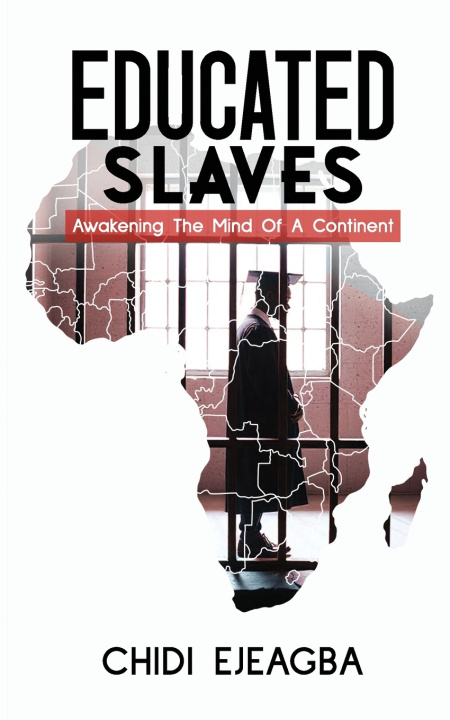
What if the education meant to liberate us is actually teaching us to conform?
In Educated Slaves, Chidi Ejeagba confronts one of Africa's most persistent challenges: an education system that, in his view, remains deeply shaped by its colonial inheritance and disconnected from the cultural, social, and economic realities of the people it is meant to serve.
From the legacy of colonial education and the limitations of inherited curricula to the erosion of indigenous knowledge and local languages, Ejeagba examines how education can produce certificates without competence, graduates without practical skills, and societies that consume knowledge without sufficiently transforming it into local solutions.
But Educated Slaves is more than a critique. It is a call to rethink what education should accomplish.
The book explores the need to:
• build education around critical thinking, creativity, and problem-solving
• reconnect learning with African history, culture, and indigenous knowledge
• restore the place of local languages in education
• strengthen vocational training and practical skills
• align education with local economic realities and innovation
• create the infrastructure necessary for meaningful educational reform
• cultivate lifelong learning beyond certificates and classrooms
At its heart is a provocative question: What should education look like when its purpose is not conformity, but empowerment?
Educated Slaves challenges Africans, educators, policymakers, parents, students, and concerned citizens to reconsider the meaning of education itself and imagine a system capable of developing people who can think independently, solve the problems around them, create value from local resources, and participate confidently in shaping Africa's future.
Education should be a bridge to freedom, not a tool of conformity.