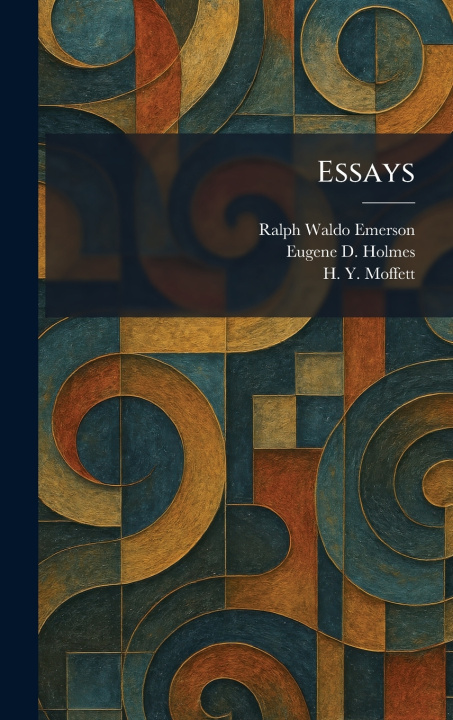
"Essays" is a foundational collection of prose by Ralph Waldo Emerson, the leading voice of the American Transcendentalist movement. This influential body of work explores the core tenets of Emersonian philosophy, emphasizing the sanctity of the individual, the importance of self-reliance, and the spiritual connection between humanity and the natural world. Through his celebrated and poetic style, Emerson encourages readers to break free from the constraints of societal conformity and historical tradition in favor of original thought and personal experience.
The collection includes some of the most significant pieces in American literature, such as "Self-Reliance," which champions the internal authority of the soul, and "Nature," which serves as a manifesto for a new way of perceiving the environment and the divine. Emerson's meditations on the "Over-Soul," friendship, and morality offer profound insights into the human spirit and its potential for growth. As a cornerstone of nineteenth-century intellectual history, "Essays" remains a vital and inspiring text, challenging generations of readers to live with purpose and integrity. This work continues to be studied for its literary brilliance and its enduring impact on the development of American philosophy and culture.
This work has been selected by scholars as being culturally important, and is part of the knowledge base of civilization as we know it. This work was reproduced from the original artifact, and remains as true to the original work as possible. Therefore, you may see the original copyright references, library stamps (as most of these works have been housed in our most important libraries around the world), and other notations in the work.
This work is in the public domain in the United States of America, and possibly other nations. Within the United States, you may freely copy and distribute this work, as no entity (individual or corporate) has a copyright on the body of the work.
As a reproduction of a historical artifact, this work may contain missing or blurred pages, poor pictures, errant marks, etc. Scholars believe, and we concur, that this work is important enough to be preserved, reproduced, and made generally available to the public. We appreciate your support of the preservation process, and thank you for being an important part of keeping this knowledge alive and relevant.