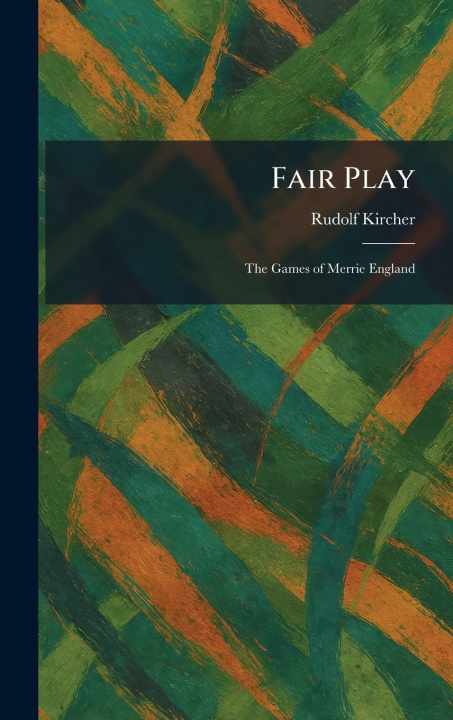
"Fair Play: The Games of Merrie England" explores the deep-rooted relationship between the British people and their sporting traditions. Written from a keen observational perspective, this work examines how the concept of "fair play" became a cornerstone of the English identity and social fabric.
The book delves into various popular pastimes and organized sports, analyzing their development and the specific social values they instill. From cricket and football to racing and rowing, the text illustrates how these activities are far more than mere leisure; they are essential components of the national character. Rudolf Kircher highlights the spirit of amateurism, the ethics of competition, and the cultural philosophy that prioritizes how the game is played over the final score.
This insightful study offers a valuable historical look at the sportsmanship that defined an era and provides a window into the societal structures of early 20th-century Britain. It serves as an essential resource for those interested in the history of athletics, the evolution of sports ethics, and the cultural history of England during a period of significant social transition.
This work has been selected by scholars as being culturally important, and is part of the knowledge base of civilization as we know it. This work was reproduced from the original artifact, and remains as true to the original work as possible. Therefore, you may see the original copyright references, library stamps (as most of these works have been housed in our most important libraries around the world), and other notations in the work.
This work is in the public domain in the United States of America, and possibly other nations. Within the United States, you may freely copy and distribute this work, as no entity (individual or corporate) has a copyright on the body of the work.
As a reproduction of a historical artifact, this work may contain missing or blurred pages, poor pictures, errant marks, etc. Scholars believe, and we concur, that this work is important enough to be preserved, reproduced, and made generally available to the public. We appreciate your support of the preservation process, and thank you for being an important part of keeping this knowledge alive and relevant.