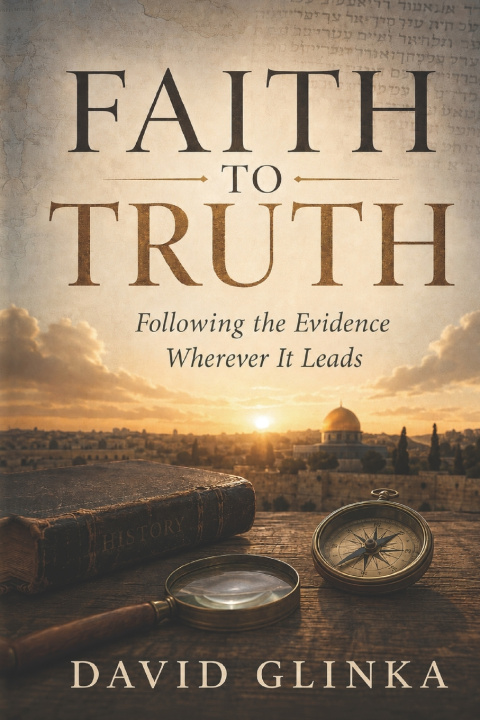
Faith to Truth: Following the Evidence Wherever It Leads is the memoir of David Glinka, a retired United States Air Force Explosive Ordnance Disposal Master Blaster, who applied the same analytical precision that guided his military career to one of the most personal investigations of his life: the origins, context, and historical reliability of the New Testament.
Glinka's journey begins not in skepticism but in deep commitment. After a painful divorce, he finds refuge in charismatic evangelicalism, immerses himself in worship and intensive Bible study, and falls in love with the community. But as his study deepens, questions multiply. Failed miracles, unanswered prayers, and theological contradictions that careful reading could no longer explain away slowly dismantle the certainty he had built his life on.
What sets Faith to Truth apart from conventional deconstruction narratives is its methodology. Rather than abandoning Scripture, Glinka engages it more rigorously - through Jewish idioms, apocalyptic language, original audience intent, and a covenantal framework rooted in Second Temple Judaism. He argues that the New Testament was never written as a universal human document, but as a covenant story addressed specifically to first-century Israel, and that two thousand years of misreading its audience has produced doctrines its authors never intended.
Moving from personal memoir to historical-critical analysis, the book examines textual variants, manuscript evidence, prophetic metaphor, preterist eschatology, and the political context of the Roman occupation. It asks whether the doctrines of sin, atonement, resurrection, and the Trinity can survive honest scrutiny of their own textual foundations - and concludes that they cannot.
Part V, Beyond the Fold, turns to life after certainty: the psychological realities of leaving faith, the question of morality without religion, and the unexpected freedom that follows intellectual honesty.
Faith to Truth is for anyone who senses that the Bible was written for someone else and suspects that suspicion might be correct.