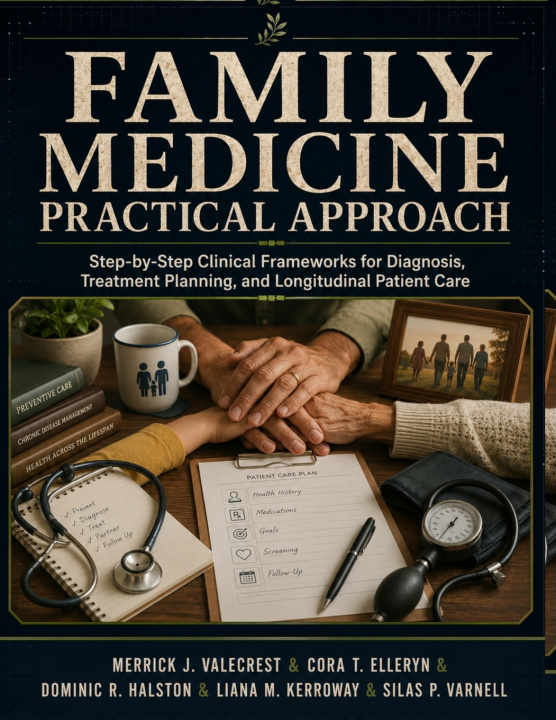
Most patients do not present with a diagnosis-they present with symptoms that must be interpreted in context. In family medicine, the challenge is not only identifying illness early, but also understanding patterns across age groups, conditions, and stages of disease.
Family Medicine Practical Approach is written to support that way of thinking. It focuses on the structured evaluation of patients in primary care, where decisions often begin with limited information and develop through follow-up, observation, and clinical judgment.
The book follows a problem-oriented approach commonly used in family practice, guiding readers through how to assess, narrow differentials, and decide on appropriate management in both acute and long-term care settings.
It covers:
Evaluation of common presenting complaints in primary care
Formation of differential diagnoses based on symptoms and risk factors
Initial investigation choices and interpretation in outpatient settings
Management of chronic conditions and continuity of care
Recognition of when referral or escalation is appropriate
The emphasis is on practical decision-making in real clinical environments, where care is continuous and patient history plays a central role in diagnosis and treatment planning.
This book is intended for medical students, interns, residents, and clinicians working in primary care and outpatient settings.
Family Medicine Practical Approach is structured as a clinical guide for everyday patient evaluation and long-term care decisions in family practice.