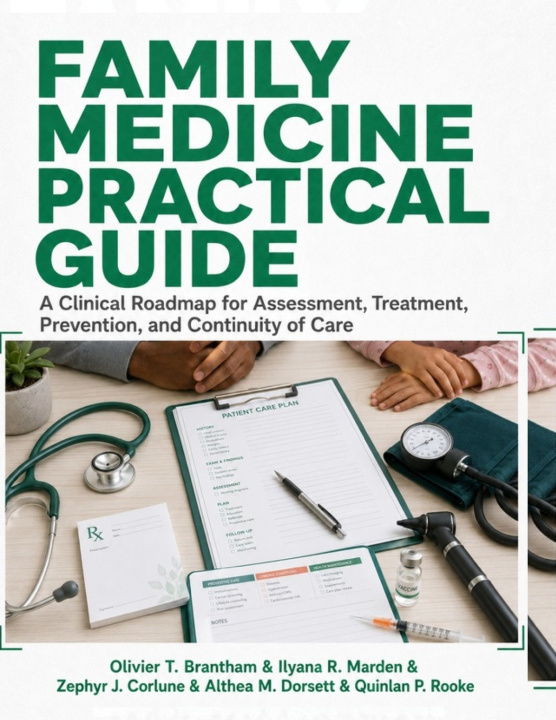
Family Medicine Practical Guide is a clear, clinically grounded resource for readers who want to understand how primary care decisions are made across everyday practice. It is written for medical students, residents, physician assistants, nurse practitioners, family medicine clinicians, and healthcare learners who need a practical roadmap for assessment, treatment, prevention, and long-term patient follow-up.
Family medicine is not limited to one organ system, one age group, or one type of visit. It requires the clinician to recognize acute problems, manage chronic conditions, prevent future illness, coordinate care, and build trust over time. This guide helps readers connect patient history, physical examination, risk factors, diagnostic reasoning, treatment planning, counseling, and continuity of care in a way that feels structured and realistic.
Inside this book, readers will gain:
A practical framework for evaluating common outpatient and urgent primary care problems
Clearer understanding of how to move from symptoms to focused assessment and differential diagnosis
Better confidence in managing chronic conditions such as hypertension, diabetes, asthma, obesity, pain, anxiety, depression, and cardiovascular risk
A stronger approach to preventive care, screening, immunization, lifestyle counseling, and risk reduction
Guidance on follow-up planning, monitoring response to treatment, and adjusting care when patients do not improve
A more organized way to recognize red flags and decide when referral, emergency evaluation, or specialist input is needed
Practical support for caring for children, adults, older patients, families, and patients with multiple ongoing concerns
Better understanding of patient communication, shared decision-making, care coordination, and long-term therapeutic relationships
A realistic view of how family medicine connects acute care, chronic disease management, prevention, and continuity
The book covers essential areas of family medicine, including clinical assessment, common symptoms, acute illness, chronic disease, women's health, men's health, child and adolescent care, older adult care, mental health, preventive medicine, medication safety, office-based decision-making, follow-up, and patient-centered communication.
Family Medicine Practical Guide does not promise shortcuts or replace supervised clinical training. Its purpose is to help readers think more clearly in the broad, fast-moving world of primary care, where one visit may involve diagnosis, treatment, prevention, reassurance, education, and long-term planning.
Whether used during clinical rotations, residency preparation, primary care review, outpatient practice, or professional development, this guide offers a realistic and organized path toward stronger clinical reasoning, safer care decisions, and more confident continuity-based practice.