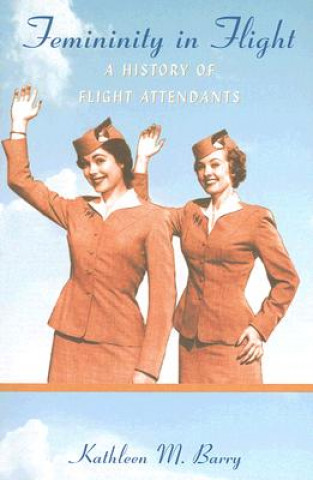
Könyv Femininity in Flight Kathleen M. Barry

Femininity in Flight

A History of Flight Attendants

Nyelv: Angol
Kötés: Puha kötésű
Elérhetőség: Beszállítói készleten
Küldés 9-15 napon belül
13 928 Ft
"In her new chic outfit, she looks like anything but a stewardess working. But work she does. Hard,...

Információk a könyvről

Nyelv
Angol
Kötés
Könyv - Puha kötésű
Kiadva
2007
oldal
328
EAN
9780822339465
ISBN
0822339463
Enbook ID
04938492
Súly
472
Méretek
155 x 237 x 20

Teljes leírás

"In her new chic outfit, she looks like anything but a stewardess working. But work she does. Hard, too. And you hardly know it." So read the text of a 1969 newspaper advertisement for Delta Airlines featuring a picture of a brightly smiling blond stewardess striding confidently down the aisle of an airplane cabin to deliver a meal. From the moment the first stewardess took flight in 1930, flight attendants became glamorous icons of femininity. For decades, airlines hired only young, attractive, unmarried, white women. They marketed passenger service aloft as an essentially feminine exercise in exuding charm, looking fabulous, and providing comfort. The actual work that flight attendants did - ensuring passenger safety, assuaging fears, serving food and drinks, all the while conforming to airlines' strict rules about appearance - was supposed to appear effortless. The better stewardesses performed by airline standards, the more hidden were their skills and labour. Yet today flight attendants are acknowledged safety experts; they have their own unions. Gone are the marriage bans, the mandates to retire by thirty-two. In Femininity in Flight, Kathleen M. Barry tells the history of U.S. flight attendants, tracing the evolution of their glamorized image as ideal women and their activism as trade unionists and feminists. Barry argues that largely because their glamour obscured their labour, flight attendants unionized in the late 1940s and 1950s to demand recognition and respect as workers and self-styled professionals. In the 1960s and 1970s, flight attendants were one of the first groups to take advantage of new laws prohibiting sex discrimination. Their challenges to airlines' restrictive employment policies and exploitive marketing (including skimpy uniforms and provocative slogans such as 'fly me') made them high-profile critics of the cultural mystification and economic devaluing of "women's work." Barry combines attention to the political economy and technology of the airline industry with perceptive readings of popular culture, newspapers, industry publications, and worker accounts. In so doing, she provides a potent mix of social and cultural history and a major contribution to the history of women's work and working women's activism.

Érdekelheti

Berserk Volume 39

Kentaro Miura
4 392 Ft

Deliver Us from Evil

Deborah Hunter-Marsh
7 488 Ft

Burying Ariel

Gail Bowen
4 490 Ft

Bipolar Teen

Heather Rose
4 306 Ft

Growing Up in Armyville

Deborah Harrison
16 711 Ft
4 306 Ft

Imagination Amy

Kamelia Pinnock Morgan
5 852 Ft
19 296 Ft

Leaf Thief

Nicola Slater
5 682 Ft

Plato's Epistemology Being and Seeming (Paperback)

Professor of Philosophy Jessica (New York University) Moss
9 608 Ft
40 430 Ft

Eurosam 84

John Fitch
19 296 Ft

Trifle

Helen Saberi
9 039 Ft

Azok a vásárlók, akik ezt a könyvet megvásárolták, a következőket is megvásárolták