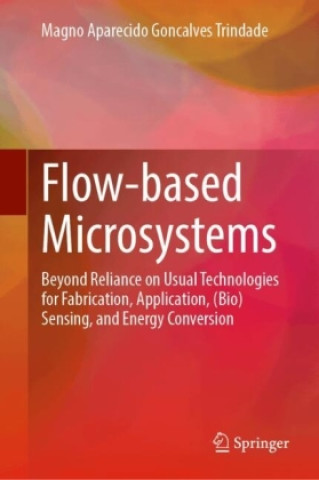
This book addresses the use of alternatives technologies to innovate in "flow-based microsystems: beyond reliance on usual technologies." This book explores the cutting edge of analytical chemistry, presenting creative fabrication approaches that move beyond conventional planar lithography and soft lithography. Readers find practical guidance on advanced techniques such as 3D-printing, sacrificial templating, and hybrid methods, all designed to overcome traditional barriers and enable resourceful device development in any laboratory setting. Structured as a comprehensive guide, this book highlights the integration of fluidic platforms with modern sensing, separation, and energy conversion technologies. It emphasizes real-world applications, from point-of-care diagnostics and environmental monitoring to wearable biosensors and sustainable energy solutions using microfluidic fuel cells. Each chapter combines foundational principles with state-of-the-art case studies, showing how new manufacturing methods enable miniaturization, multi-functionality, and versatility. Ideal for researchers and students alike, this book bridges the gap between established techniques and emerging trends, providing the insights needed to design, fabricate, and apply next generation microdevices. Whether operating with advanced equipment or navigating infrastructure limitations, readers find inspiration and expertise for pushing the limitations of flow-based microsystems.