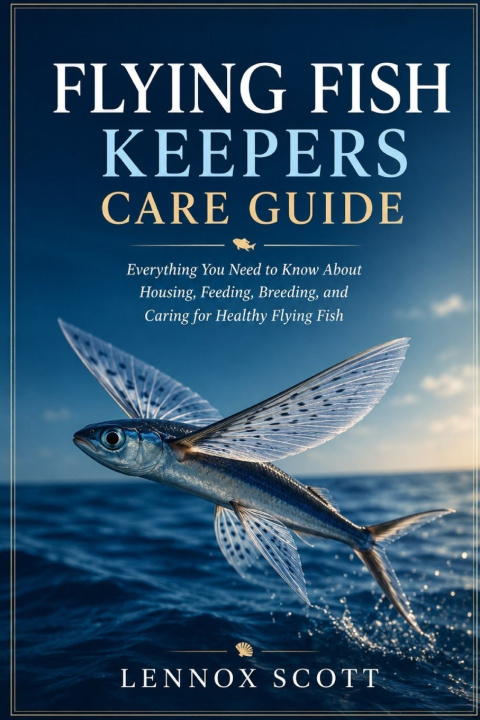
Flying Fish Keepers Care Guide is a comprehensive handbook designed to help aquarists understand, house, and care for flying fish successfully in captivity. The guide begins by exploring the natural history, anatomy, behavior, and unique gliding adaptations that make flying fish among the most fascinating marine species. Understanding their origins and ecological role provides the foundation for responsible husbandry.
The book explains how to select appropriate species, design spacious and secure aquariums, and establish stable marine environments that closely resemble natural ocean conditions. Special attention is given to water quality management, filtration systems, oxygenation, temperature control, lighting, and tank security, recognizing that flying fish are active surface dwellers with specialized environmental needs.
Nutrition is covered extensively, including dietary requirements, feeding schedules, food selection, supplementation, and strategies for maintaining long-term health through balanced nutrition. The guide also discusses social behavior, community compatibility, and selecting suitable tank mates while avoiding species that may create stress or competition.
Health care and disease prevention form a major focus of the handbook, emphasizing the importance of quarantine procedures, water quality maintenance, stress reduction, and early disease detection. Readers learn how to recognize signs of illness, respond to common health concerns, and create conditions that strengthen natural immune function.
The guide explores stress management techniques, environmental enrichment, behavioral observation, and methods for creating secure and stable habitats that support psychological well-being. It also provides an in-depth examination of flying fish reproductive biology, breeding behavior, egg development, larval growth, and the challenges associated with captive breeding.
Conservation topics highlight the ecological importance of flying fish, the threats posed by pollution, overfishing, habitat degradation, and climate change, as well as the role responsible aquarists can play in supporting marine conservation efforts. Advanced chapters focus on long-term management, system optimization, preventive maintenance, aging fish care, emergency preparedness, and ethical stewardship.
Ultimately, the handbook emphasizes that successful flying fish care depends on understanding natural behavior, maintaining excellent water quality, providing appropriate nutrition, minimizing stress, preventing disease, and committing to lifelong learning. By applying these principles, keepers can provide exceptional care while developing a deeper appreciation for one of the ocean's most remarkable species.