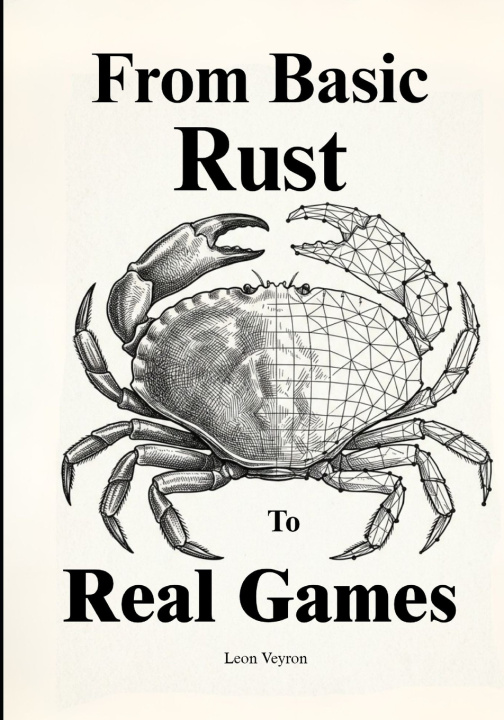
Turn your ideas into playable 2D and 3D games with Rust and Bevy. Whether you are learning game programming for the first time or looking to build more structured, efficient projects, this hands-on guide takes you beyond basic code and shows you how the pieces of a complete game fit together.
Learn how to use Rust and the Bevy game engine to create interactive game worlds, design reusable gameplay systems, implement realistic movement, and develop features that make games engaging. By combining practical programming lessons with complete projects, you will build the knowledge to move from simple Rust programs to games you can test, optimize, and prepare for distribution.
Rust brings performance, memory safety, and reliable resource management to modern software development. Bevy complements these strengths with its open-source, data-driven architecture and Entity Component System (ECS). Instead of relying on complicated object hierarchies, you will learn to organize game logic using entities, components, systems, resources, queries, and plugins. This approach provides a flexible foundation for developing both 2D and 3D experiences.
The book begins with essential Rust programming concepts, including variables, data types, functions, structs, enums, ownership, borrowing, collections, error handling, and project organization. You will then apply these foundations to Bevy through practical lessons covering rendering, cameras, sprites, input handling, assets, audio, movement, animation, collision detection, and physics.
As your skills develop, you will build Ember Run, a complete 2D platform game featuring player controls, enemies, combat, collectibles, level progression, menus, sound effects, user interfaces, and saved game progress. You will then explore 3D development through Crystal Courtyard, working with meshes, materials, lighting, glTF models, third-person controls, collisions, and interactive gameplay. Finally, you will learn the engineering practices needed to debug, test, profile, optimize, package, and deploy your projects.
What's Inside This Book?
Learn Rust fundamentals, ownership, borrowing, and error handling through practical examples.
Understand Bevy's Entity Component System and build modular, reusable game architecture.
Create interactive 2D worlds with sprites, cameras, keyboard controls, animation, and physics.
Develop a complete 2D platformer with enemies, combat, scoring, menus, and persistent progress.
Build 3D scenes using meshes, materials, lighting, imported models, and third-person controls.
Debug game systems, test gameplay logic, profile performance, and optimize resource usage.
Prepare release builds, package desktop games, and explore browser-based deployment.
Who Is This Book For?
This guide is written for aspiring game developers, Rust programmers, computer science students, software engineers, and independent developers who want practical experience building games with Rust and Bevy. Beginners with basic programming knowledge can follow the progressive explanations, while developers familiar with Rust can use the projects to strengthen their understanding of ECS architecture and complete game development.
You do not need previous experience with Bevy or professional game development to get started. What matters is your willingness to write code, experiment with the examples, solve problems, and develop your own ideas.
Start building beyond simple programming exercises.
Get your copy today and take the next step toward creating, improving, and distributing your own 2D and 3D games with Rust and Bevy.