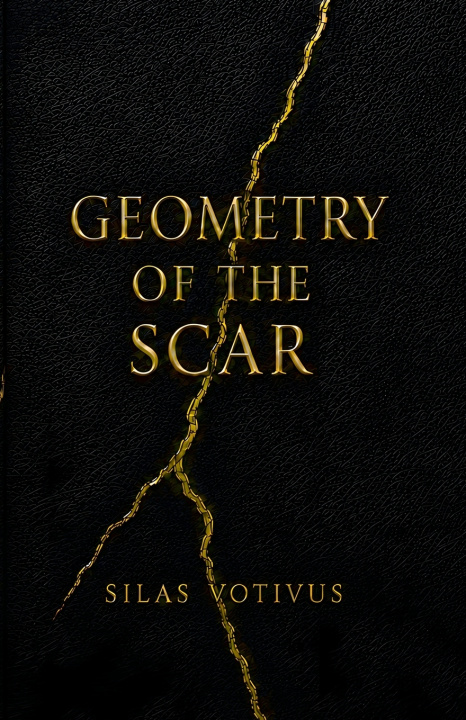
Geometry of the Scar is a book-length poem in four movements - The Fever, The Shrapnel, The Salt, and The Loom - by Silas Votivus, published by Votivus Press, New York, 2026.
The work charts the complete arc of interior collapse and reconstruction through an extended sequence of linked poems. Each movement corresponds to a distinct psychological and emotional terrain: The Fever maps the early stage of crisis and burning pressure; The Shrapnel explores the violence of fracture and the aftermath of impact; The Salt depicts a frozen, calcified landscape of numbness and suspended time; and The Loom enacts the slow, unglamorous process of rebuilding identity from debris.
The central metaphor system draws from metallurgy, engineering, architecture, weaving, and industrial machinery. Recurring images include flint, iron, zinc, lead, salt flats, frozen clocks, rusted looms, shrapnel, and structural timber. The emotional and psychological content addresses grief, identity dissolution, self-confrontation, trauma, family rupture, creative struggle, depression, emotional numbness, and ultimately resilience - not as a triumphant recovery, but as the hard, practical work of assembly.
The book operates within the tradition of the long poem and the lyric sequence, drawing on influences including Claudia Rankine, Ocean Vuong, and Anne Carson. It is written in a compressed, imagistic free verse with a distinctive industrial and architectural vocabulary. The numbered "Links" that form each movement function as interlocking structural units, building cumulative emotional and thematic weight across the collection.
Thematically, the book engages with the kintsugi principle - the Japanese art of repairing broken objects with gold - as well as Western traditions of elegy, confession, and witness. It is relevant to readers interested in contemporary American poetry, trauma and recovery narratives, experimental lyric poetry, and the intersection of emotional experience with physical and material imagery.
The intended readership includes general literary audiences, poetry readers, and readers drawn to narratives of psychological survival and reconstruction.