Könyv God Owes Us Nothing Leszek Kolakowski

God Owes Us Nothing

Brief Remarks on Pascal's Religion and on the Spirit of Jansenism

Nyelv: Angol
Kötés: Kemény kötésű
Elérhetőség: Utánnyomás
Megjelenés ismeretlen
37 989 Ft
This volume presents a new interpretation of a centuries-long debate in Christianity: how to reconci...

Információk a könyvről

Nyelv
Angol
Kötés
Könyv - Kemény kötésű
Kiadva
1995
oldal
248
EAN
9780226450513
Enbook ID
04546522
Súly
440
Méretek
145 x 220 x 25

Teljes leírás

This volume presents a new interpretation of a centuries-long debate in Christianity: how to reconcile the existence of evil in the world with the goodness of an omnipotent God. In Augustinian doctrine, evil is the absence of good, God is omnipotent, and individuals are predestined to salvation or damnation. We are powerless to influence God's bestowal of grace by either word or deed: in short, God owes us nothing. Augustine's view was attacked as unduly harsh by the 4th-century monk Pelagius, whose followers believed that humans can earn grace through good acts. The Church condemned this teaching as heresy, but controversies concerning evil, free will, divine omnipotence, grace, and predestination continued over the centuries. In the 17th century, the theologian Jansenius returned to Augustinian doctrine and created his own heresy: he repudiated free will, accepted predestination and taught that God is free to bestow grace upon the wicked and withhold it from the good; because of original sin, no one is deserving of grace. Renowned as a philosopher with deep religious sensitivities, Kolakowski confronts this controversy. He argues that the teachings of Jansenius and Augustine both reflect the very principles and spirit upon which the Church was founded, and to reject one is to reject the other. His central thesis is that by condemning Jansenism, the Church also found a way to abandon its 1000-year adherence to the doctrines of Saint Augustine. Kolakowski continues this critical encounter with an examination of Pascal, whose powerful moral philosophy has roots in Jansenism. Pascal affirmed the divine omnipotence of God in his famous Wager: if God does not exist, nothing is lost by not having faith; if God does exist, the believer gains eternal life through faith. Kolakowski interprets the Wager as a sign of the limitations of reason and a necessity for a mystical faith. Pascal's religion is thus true both to the spirit of Jansenius and of Augustine.

Érdekelheti

5 992 Ft

The Starless Sea

Erin Morgenstern
3 882 Ft
3 207 Ft

Introduction to Rpa

Abhinav Sabharwal
2 852 Ft
33 949 Ft
22 739 Ft

Triangulation

Gregory Ashe
5 533 Ft

Rhymes in Red

W. Phillpotts Williams
5 762 Ft
3 536 Ft
40 697 Ft

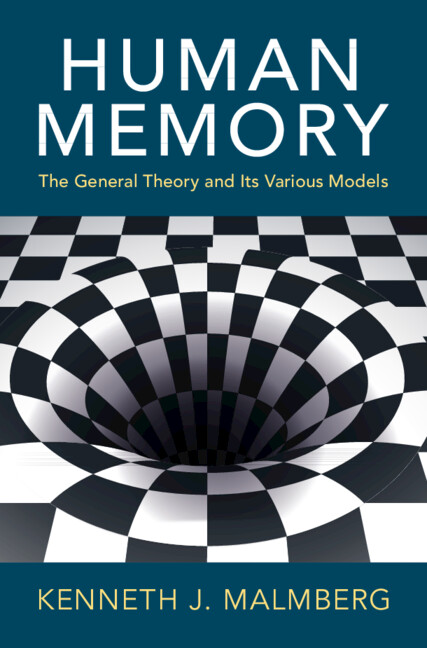
Human Memory

Kenneth J. Malmberg
15 263 Ft

A History of Art

William Henry Goodyear
13 522 Ft

Azok a vásárlók, akik ezt a könyvet megvásárolták, a következőket is megvásárolták

Nesmrtelný Cheops

Valery Esperian
4 692 Ft
4 863 Ft

Krieg dem Kriege

Ernst Friedrich
6 806 Ft
2 168 Ft

Zur Farbenlehre (Grossdruck)

Johann Wolfgang Goethe
16 788 Ft

Jedna rzecz

Keller Gary
1 952 Ft

Tarot de Marseille

Philippe Camoin
11 196 Ft

Chien Brun

Harrison
1 952 Ft

Ganz schön clever

Schmidt Spiele
4 993 Ft

Pedro Paramo

Juan Rulfo
1 898 Ft

Benkő Laci

Havas Henrik
3 711 Ft