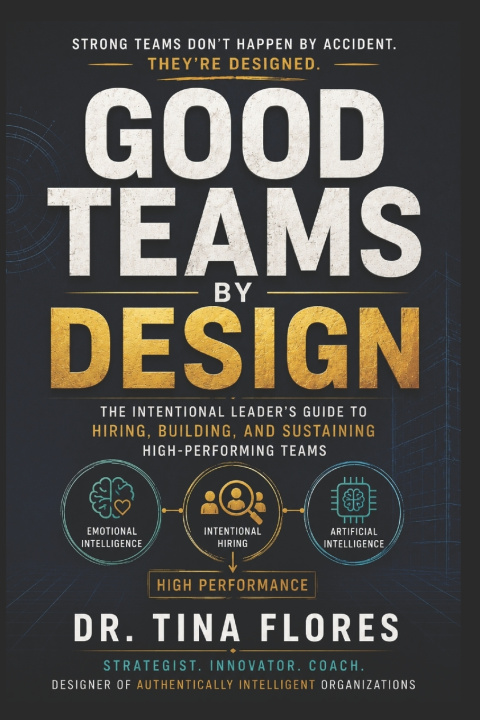
Most teams are not built. They just happen.
A position opens. A familiar name surfaces. A contractor whose contract is ending is available right now. And before anyone has asked the right questions, a team has formed. Not by design, but by default.
The cost of that accidental team is staggering. Not just in turnover dollars, though those numbers are damning, but in the daily friction your people absorb. The miscommunications that feel personal but aren't. The meetings where everyone is physically present and emotionally checked out. The talented employees who quietly update their resumes because the dysfunction isn't worth the commute.
Good Teams by Design gives you the framework to stop building teams by accident.
Grounded in the Dual Dynamics Hiring Model, developed through doctoral research at the intersection of emotional intelligence and organizational design, this book walks managers through every stage of intentional team architecture: from writing a job description that reflects the work that actually needs to happen, to hiring for ecosystem fit rather than chemistry, to onboarding in a way that doesn't dismantle what you built in the interview process.
You'll learn why culture fit is often affinity bias with better branding. Why the person who makes every meeting longer is frequently the reason the project doesn't fall apart. Why unanimous panel enthusiasm is a warning sign, not a green light. And why the first 90 days of employment are not orientation. They're architecture.
Built on 20 plus years of federal talent acquisition across federal and commercial environments where the cost of a mis-hire isn't just HR dollars but contract performance, CPARS ratings, and public accountability, this book is for every manager who has ever inherited someone else's disaster and vowed to do it differently next time.
The people who come through a well-built team are changed by it. They carry its standards into every team they touch afterward. That compounding effect is real, durable, and almost entirely invisible in the metrics organizations use to evaluate performance.
This book makes it visible.
So, grab a copy and go design a good team!