On January 27 1967 the United States signed the Outer Space Treaty. That same evening three astronauts died in a fire inside the Apollo 1 command module. The treaty kept weapons out of orbit and stopped any nation from claiming the Moon. It did its job perfectly. But it never prepared us for the next step.
Permanent human settlement on Mars now moves forward on real schedules and real budgets. The first crews will land within years. Yet no adequate legal framework exists to govern the people who will live there. The documents written in the 1960s cannot answer the questions that will decide life and death on another planet.
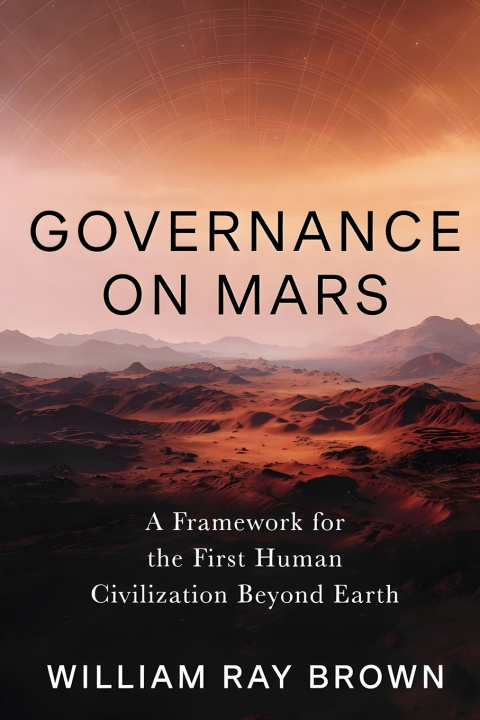
This book confronts the problem directly. It examines the four models everyone assumes will work: the treaty model the corporate model the colonial model and the Antarctic model. Each one fails for structural reasons no amount of goodwill can fix.
The author then derives five principles from the unforgiving realities of Mars itself. The speed of light. The absence of exit. The transportation monopoly. The arithmetic of population growth. The constant threat of lethal emergencies. From those constraints he builds a complete governance framework.
The result is a short practical document. One page in plain language. It creates three tiers of authority a protected rights floor resource rules and automatic transitions to self government at fixed population thresholds. It can be established before the first crisis.
Governance on Mars delivers the missing blueprint. It shows why we must act now while the window remains open and before events on the surface write the rules for us. The first child born on Mars deserves better than an improvised order built under pressure.
This is the framework the next civilization needs. Read it before the first boots touch the red dust.
About the Author
William Ray Brown builds software systems and writes fiction about the documented edges of government secrecy. Governance on Mars is his first major work of nonfiction.