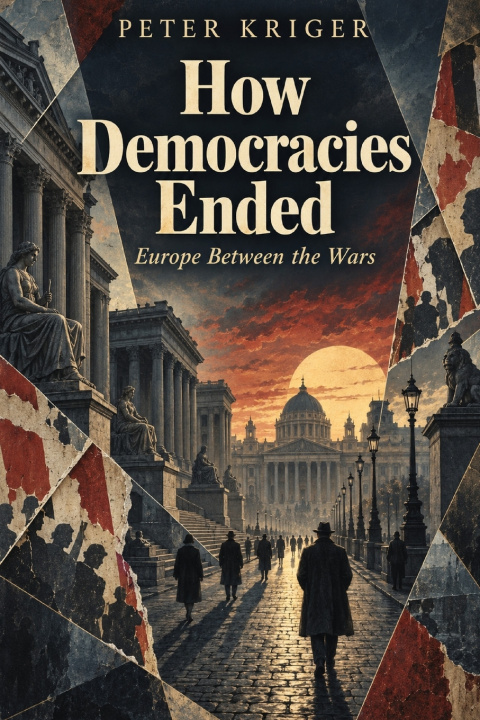
In 1919 Europe was full of brand-new democracies. Parliaments opened, constitutions were printed on good paper, women voted for the first time in half a dozen countries, and serious men in wing collars believed they had built something permanent. Twenty years later most of it was gone.
The usual story blames villains. This book blames the paperwork.
Almost none of Europe's interwar democracies were overthrown by a mob storming the palace. They were signed away, legally, in office hours, by respectable men who had sworn oaths to defend them and who genuinely believed they were saving the country from something worse. The emergency powers the dictators used were not smuggled in. They were installed at the factory, written into the founding constitutions by exhausted committees, and then worn smooth by years of ordinary democratic use before anyone dangerous got near them. By the time the men in colored shirts arrived, the machinery of emergency rule was warm, tested, and waiting for a new operator.
Peter Kriger tracks that machinery across a continent: through Italy's king in his dressing gown, Poland's marshal negotiating a coup on a bridge, Austria's parliament dissolving itself by accident over a disputed vote, Vienna's artillery shelling its own public housing, and Germany's chancellors ruling by decree for three years before Hitler took the job. He also asks the question the genre usually skips. Britain, Sweden, Finland, Czechoslovakia and the Low Countries came through. Was that virtue, or was that luck, and how would we tell the difference from here?
Sharp, fast, frequently funny and never cruel, this is history written for people who suspect the subject has stopped being historical.
Keywords: democracy, interwar Europe, fascism, constitutions, emergency powers, political collapse, twentieth-century history