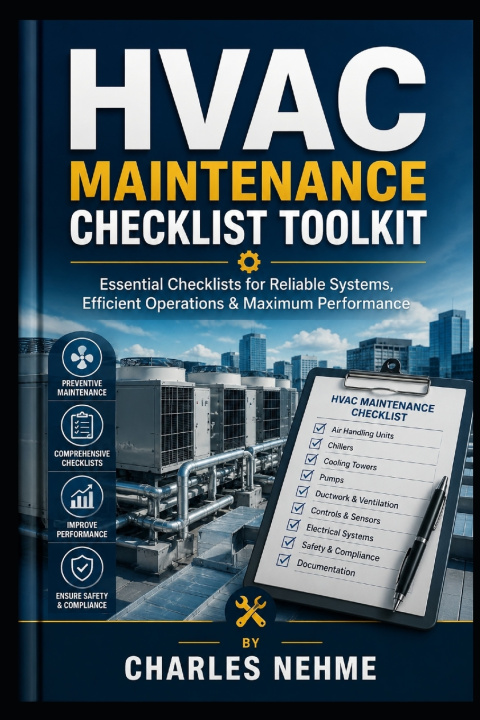
Heating, Ventilation, and Air Conditioning (HVAC) systems are among the most critical assets in any building. They provide thermal comfort, maintain indoor air quality, protect equipment, preserve products, and ensure that facilities operate safely and efficiently. Whether serving an office building, hospital, hotel, data center, manufacturing plant, or commercial complex, HVAC systems require regular inspection and preventive maintenance to achieve maximum reliability and performance.
The purpose of this HVAC Maintenance Checklist Toolkit is to provide maintenance professionals, facility managers, engineers, technicians, contractors, and building owners with a practical and structured approach to inspecting HVAC systems. Rather than relying solely on experience or memory, this toolkit presents a comprehensive series of inspection questions that guide users through every major component of an HVAC installation.
Each checklist item is designed to encourage careful observation and verification. By systematically evaluating equipment condition, cleanliness, electrical integrity, airflow, refrigerant performance, water systems, controls, and operational efficiency, maintenance personnel can identify problems before they develop into costly failures. Early detection not only reduces unexpected downtime but also extends equipment life, improves occupant comfort, lowers energy consumption, and minimizes repair costs.
This toolkit covers a broad range of HVAC equipment, including:
- Air Handling Units (AHUs)
- Fans and Ventilation Systems
- Chillers
- Cooling Towers
- Pumps
- Ductwork
- Air Distribution Systems
- Electrical Components
- Building Management System (BMS) Controls
- Final Operational Performance Verification
The checklist format allows organizations to establish consistent maintenance standards across multiple facilities while supporting preventive maintenance programs, condition assessments, internal quality audits, commissioning verification, and facility inspections. It can also be incorporated into Computerized Maintenance Management Systems (CMMS), digital inspection platforms, or customized maintenance procedures.
Although every building has unique operational requirements, the inspection principles presented in this book are based on internationally recognized HVAC maintenance practices and can be adapted to suit facilities of all sizes and applications.
Regular preventive maintenance remains one of the most cost-effective investments any facility can make. Well-maintained HVAC systems consume less energy, experience fewer breakdowns, provide greater occupant comfort, and deliver a significantly longer service life than neglected equipment.
It is my hope that this toolkit becomes a valuable day-to-day reference for engineers, technicians, maintenance teams, consultants, and facility professionals committed to achieving high standards of HVAC reliability, efficiency, and operational excellence.
Charles Nehme
International HVAC, MEP, and Facilities Management Consultant
Author of Engineering Checklists, Toolkits, and Professional Technical Guides
https://bit.ly/m/HVAC