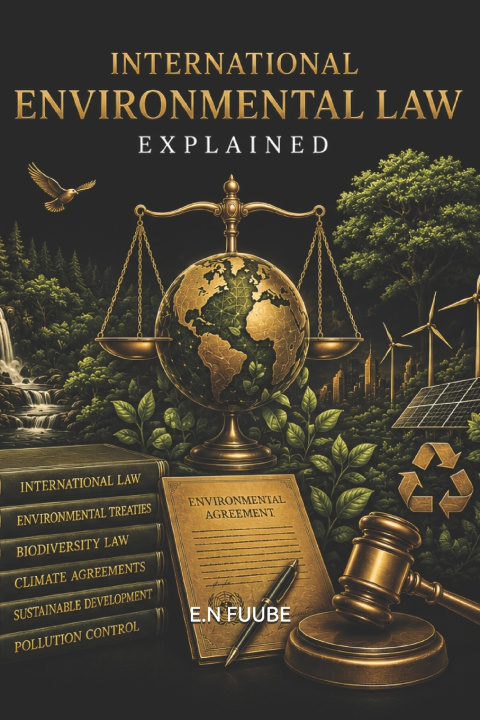
INTERNATIONAL ENVIRONMENTAL LAW EXPLAINED
Understand the Legal Framework That Protects the Environment and Promotes Sustainable DevelopmentInternational environmental law establishes the legal framework that guides global efforts to protect the environment, conserve natural resources, and address environmental challenges that affect people across national borders. It regulates climate change, biodiversity conservation, pollution control, marine protection, and sustainable development while encouraging cooperation among states and international organizations. As environmental concerns continue to shape international policy and economic development, understanding international environmental law has become increasingly important for legal professionals, policymakers, environmental practitioners, researchers, and students.
Whether you are studying law, preparing for examinations, working in environmental governance, or simply seeking to understand how international legal systems respond to global environmental challenges, INTERNATIONAL ENVIRONMENTAL LAW EXPLAINED presents the subject in a clear, practical, and accessible manner.
Inside This Book, You Will Learn1. Introduction to International Environmental Law
Understand the meaning, scope, evolution, sources, and importance of international environmental law.
2. Principles of International Environmental Law
Explore sustainable development, the precautionary principle, the polluter pays principle, and common but differentiated responsibilities.
3. International Environmental Agreements
Learn about international agreements governing climate change, biodiversity, marine protection, and hazardous waste.
4. Climate Change Law
Examine greenhouse gas emissions, carbon markets, adaptation strategies, and mitigation measures.
5. Biodiversity Conservation
Discover the legal protection of ecosystems, wildlife, endangered species, and protected areas.
6. Pollution Control
Understand international approaches to controlling air, water, and marine pollution, as well as hazardous substances.
7. International Institutions
Explore the roles of the United Nations Environment Programme, the Conference of the Parties, international environmental organizations, and regional cooperation.
8. Environmental Dispute Resolution
Learn how environmental disputes are resolved through international courts, arbitration, state responsibility, and legal remedies.
9. Emerging Environmental Challenges
Examine plastic pollution, renewable energy, artificial intelligence, and climate migration.
10. Future of International Environmental Law
Discover how global environmental governance, the Sustainable Development Goals, green innovation, and emerging legal developments are shaping the future of environmental protection.
Why This Book Is a Must-HaveThis book explains international environmental law using clear language and practical examples, making complex legal principles easy to understand. It connects legal doctrine with real-world environmental issues, helping readers appreciate how international law addresses climate change, pollution, biodiversity loss, and sustainable resource management. It is an excellent resource for students, lawyers, environmental professionals, government officials, researchers, conservation organizations, policymakers, and anyone seeking a strong foundation in international environmental law.
Develop a comprehensive understanding of the legal principles that promote environmental protection, sustainable development, and international cooperation, and gain the knowledge needed to navigate one of the fastest-evolving fields of modern law.
#InternationalEnvironmentalLaw #EnvironmentalLaw #ClimateLaw #EnvironmentalProtection #LawBooks