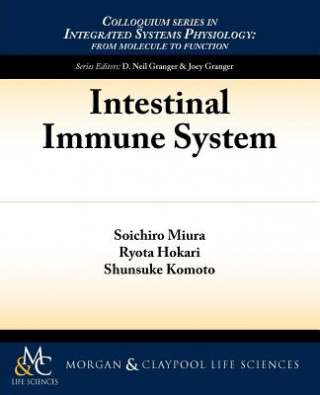
Könyv Intestinal Immune System Soichiro Miura

Intestinal Immune System

Szerző: Soichiro Miura
Nyelv: Angol
Kötés: Puha kötésű
Elérhetőség: Beszállítói készleten
Küldés 9-15 napon belül
15 808 Ft
In the intestine, a unique immunological system that is different from the systemic immune system ex...


Információk a könyvről

Szerző
Nyelv
Angol
Kötés
Könyv - Puha kötésű
Kiadva
2011
oldal
122
EAN
9781615041442
ISBN
1615041443
Enbook ID
04838993
Súly
236
Méretek
192 x 235 x 8

Teljes leírás

In the intestine, a unique immunological system that is different from the systemic immune system exists to provide adaptive immunity in response to luminal bacteria and dietary antigens. There are many lymphoid cell aggregates called gut-associated lymphoid tissue (GALT) including Peyer's patches (PPs), which function as important induction sites for the mucosal immune response. M-cells are present in the epithelium of PPs, having a specialized structure for uptake of macromolecules such as bacteria. In addition to GALT, there are abundant lymphoid cells in the intestinal lamina propria, where they mainly play a role as immune effector cells. A strong innate immune system that mainly consists of dendritic cells, macrophages, and żdT lymphocytes also exists in the intestinal mucosa to assist the barrier function of intestinal epithelial cells. The intestinal mucosa thus shows a unique morphological structure with many immune cells being present under physiological conditions. This condition is known as "controlled inflammation." These abundant immune cells also have characteristic functions: they are "negatively regulated" and have been educated not to overreact unnecessarily to the intestinal luminal milieu. Main players that control inflammation of the intestinal mucosa include regulatory cytokines and regulatory T cells which induce oral tolerance to intestinal bacteria and food antigens, and the secretory IgA system. The maintenance of unique immunological activity in the intestine is also related to an organized, orchestrated lymphocyte migratory mechanism called the "common mucosal immune system." These negative regulatory mechanisms of the intestinal immune system are disturbed in certain disease conditions, causing the immunocompetent cells to respond to food components and commensal bacteria by becoming activated and to overproduce inflammatory cytokines and chemokines. These disease conditions include food allergies, such as celiac disease, and the inflammatory bowel diseases, such as ulcerative colitis and Crohn's disease, although their exact etiological mechanisms remain to be revealed. Table of Contents: Introduction / GALT: Its Structure and Formation / Intestinal Epithelial Cells and Their Immune Function / Innate Immunity in the Intestinal Mucosa / Intraepithelial Lymphocytes (IELs) / Lymphoid Cell Trafficking in Intestinal Immunology / Site of Induction of Mucosal Immunity and Antigen Presentation by Dendritic Cells / Production of Secretory IgA (SIgA) / Effector Site of Acquired Immunity and T Helper Cell Subpopulation / Immune Regulatory System and Oral Tolerance / Food Allergy and Celiac Disease / Inflammatory Bowel Diseases / Enteric Infection with Pathogenic Microbes and Mucosal Immunity / References

Érdekelheti

12 195 Ft
4 829 Ft
3 953 Ft

THE HOUSE OF RIMMON

MARY STANBERY WATTS
13 427 Ft
5 396 Ft
3 614 Ft

Our Children in the World

CAROL LYNN WOLFRAM
7 098 Ft
12 833 Ft
12 990 Ft
26 488 Ft

Our Shared Opportunity

Thomas A. Daschle
22 339 Ft

Deal Decade

Margaret M. Blair
12 168 Ft

Azok a vásárlók, akik ezt a könyvet megvásárolták, a következőket is megvásárolták

Obr.

Martin Dostál
5 552 Ft
18 783 Ft

EL PRINCIPITO

DE SAINT-EXUPERY
6 629 Ft
6 687 Ft

W

ISAAC ROSA CAMACHO
4 645 Ft

Annäherungen

Horst Brunner
23 898 Ft