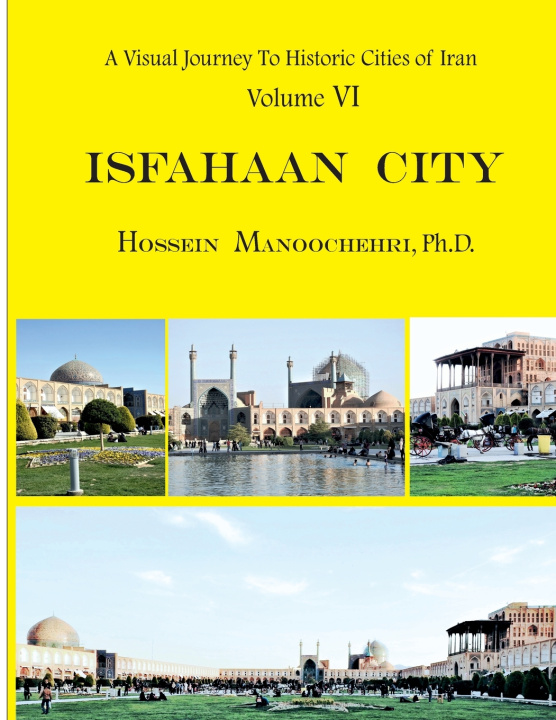
Isfahaan City, the capital of the Isfahaan province, is a historic city of Iran whose date of foundation goes back to several centuries before the A. D. 7th century.
The historic cities of Iran, founded centuries ago, host many features of the indigenous architecture of Iran. The indigenous ( or the clay) architecture of Iran is a unique architectural genre characterized by the use of mud-bricks as well as dome-like roofs for the ceilings. Traditional tiles and tile-works, furthermore, are used for the interior and exterior decorations of the buildings.
Although there are many historic cities in Iran, seven of them are selected in this series. They include: Kermaan City, Kaashaan, Naaein (Naa-een), Shiraaz, Persepolis, Isfahaan City, and Yazd City. Volume VI of this series covers main indigenous, architectural features in the historic city of Isfahaan.
Isfahaan City is a historic city in Iran which is located about 350 miles south of Tehran. By the A.D. 1st century, Isfahaan City was a well-known stopping place for the caravans that were traveling from China to Syria via the so-called Silk Road (or Silk route/ Farsi: Jadeh-e Abrisham).
Many features of the indigenous (or clay) architecture are present in Isfahaan province as well as in Isfahaan City, such
as clay castles, Jam'a mosque (initial built date: A.D. 11th century), traditional houses, wind-catching towers, baazaars, dome and arch by mud-bricks, koochehes (narrow alleyways), pigeon's towers, caravansaries, qanat irrigation system, and palaces.
Because of a modernization process in Iran from about 1950s, however, the clay architecture in Iran, as well as in Isfahaan, has been abandoned and historic buildings and structures have been demolished to be replaced by apartment complexes and by modern buildings made up of metal skeleton and concrete blocks. The present series seeks to collect images of the survived, architectural features in the historic cities of Iran before they are completely wiped out in a modernization process.
The revised edition of Isfahaan City, Volume VI of this series (copyright 2021), invites viewers to A Visual Journey Into Isfahaan City for a review of the samples of the clay ( or the indigenous) architecture in this historic city, which was the capital of Iran during the 17th and 18th centuries.