Könyv Islamists and the State Stacey Philbrick Yadav

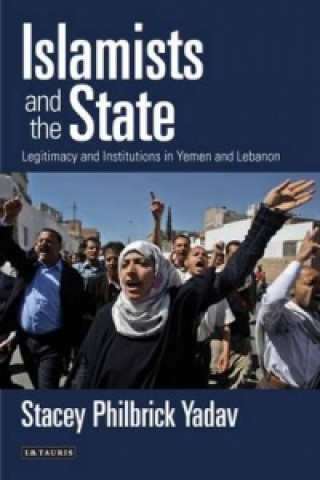
Islamists and the State

Legitimacy and Institutions in Yemen and Lebanon

Nyelv: Angol
Kötés: Kemény kötésű
Elérhetőség: Kiadói készleten rendelésre
Küldés 17-26 napon belül
76 910 Ft
In the wake of the uprisings throughout the Middle East in late 2010 and early 2011, the role of Isl...


Információk a könyvről

Nyelv
Angol
Kötés
Könyv - Kemény kötésű
Kiadva
2013
oldal
288
EAN
9781780765211
ISBN
1780765215
Enbook ID
04843659
Súly
490
Méretek
224 x 146 x 27

Teljes leírás

In the wake of the uprisings throughout the Middle East in late 2010 and early 2011, the role of Islamist parties in the political process has taken on a new importance.But counter to the commonly held belief in the West that Islamist groups aim to challenge the authority of the state itself, both Islah of Yemen and Hizbollah in Lebanon are political organisations, with aspirations to work with and through state structures. In this book, Stacey Philbrick Yadav highlights how once these Islamist organisations became part of the institutionalised and formalised state apparatus,Islamist participation can instead stengthen the state. She therefore examines the meanings that the members of the parties attach to their relationship to existing regimes and the state institutions through which power is distributed and exercised. Of course, gaps in state planning allow these two parties unique opportunities to take on some of the responsibilities of the state. This has been especially prominent in the case of Hizballah, which sought to position itself as a provider of welfare at a time when the Lebanese state, brought low by civil war, could not carry out this service. But what Philbrick Yadav sees as crucial is that there is something other than 'Islam' that determines the political positions of the two Islamist parties under exmination: more pragmatic and material imperatives. In the wake of the uprisings throughout the Middle East in late 2010 and early 2011, the role of Islamist parties in the political process has taken on a new importance. Islamists and the State questions conventionally uniform expectations regarding 'Islamist party behaviour' and gives precedence to the role of local structure and context when analysing the ativities of these parties. Philbrick Yadav argues that the participation of Islamist parties should be evaluated in terms of local contexts, not cross-national speculations about the effects of 'Islamism' as a regional or global phenomenon. Islamist, long assumed to be the primary drivers of opposition politics, are thus central to political uprisings, but not always in the ways that observers might have anticipated, nor with the kind of uncontested dominance aimed at or capable of overturning regimes.

Érdekelheti

Azok a vásárlók, akik ezt a könyvet megvásárolták, a következőket is megvásárolták

L'Amitié véritable

Aelred de Rievaulx
3 469 Ft

Hoe Te Studeren

Mauricio Fau
4 500 Ft

Esan gabe doa

ASEL LUZARRAGA ZARRABEITIA
8 478 Ft