Thebes was founded beside a spring where a dragon died. Its water ran clear. Its walls rose high. Its royal house inherited a story polished into victory, though something older remained beneath the stone: blood, venom, teeth, and the debt of a sacred body made useful.
Generations later, that debt begins to move. In a house shadowed by divine attention, Ino stands between her children and a terror no wall can hold back.
As Hera's vengeance tightens around Thebes, the dragon's spring becomes more than origin. It becomes inheritance. What was buried under law rises through bloodline, body, and memory, forcing the living to answer for a victory that was never as clean as the city needed it to be.
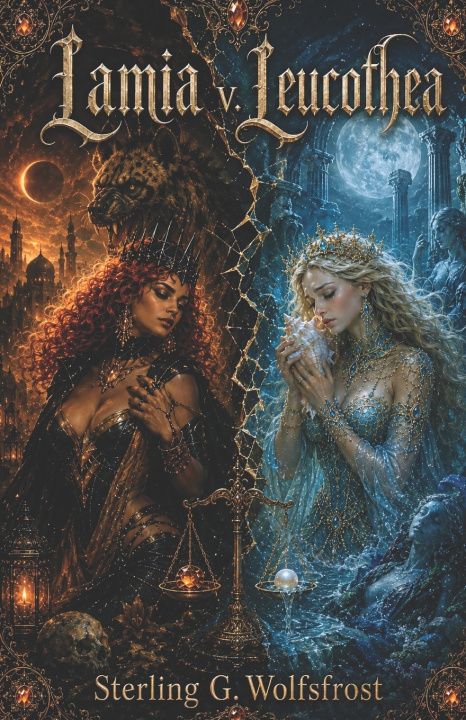
Across that road of consequence, Lamia comes as sovereign, curse, monster, and witness, drawn into a tragedy already shaped by deities, serpents, mothers, and the sea.
Gothic, mythopoetic, and sea-dark, Lamia v. Leucothea is a tragic fantasy novella of dragon-born consequence, maternal terror, monstrous transformation, and sacred judgment after innocence has already been placed in harm's path.