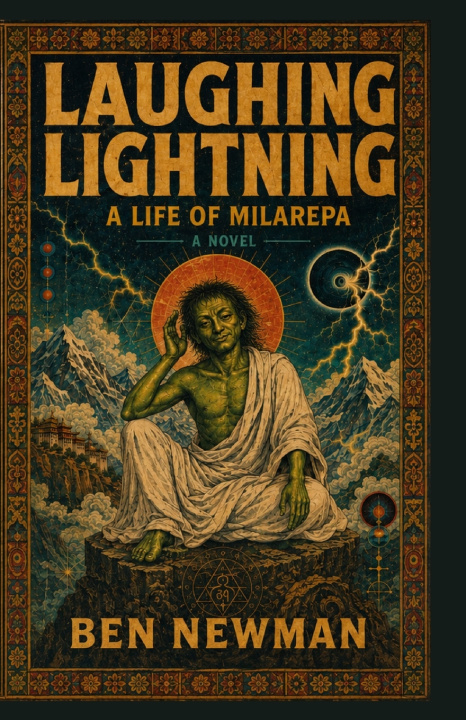
A murderer becomes a saint. This is the road between.
He was born Töpaga - "Delightful to Hear" - a boy with a singing voice and a comfortable future, until his father died and his relatives stripped his mother of everything. She sent him to learn black magic, and he was good at it: a hailstorm, a collapsing roof, thirty-five dead. Then he had to live with what he'd done.
Laughing Lightning retells the life of Milarepa, Tibet's most beloved yogi-poet, as a novel - the sorcerer who murdered for his mother's revenge, the disciple broken and remade by a merciless teacher, the naked hermit who ate nettles until his skin turned green, and finally the singing sage whose voice gathered hunters, bandits, scholars, and grieving fathers off their ordinary roads and would not let them go. It is a story about whether a person who has done the worst thing can become the best thing, and what it actually costs to find out.
Grounded in the classical sources - the Life of Tsangnyön Heruka and the Hundred Thousand Songs - but written for readers who have never heard his name, this is Milarepa rendered in the spare, luminous register of Hesse's Siddhartha: the miracles left standing as miracles, the terror and the tenderness kept whole, and the songs carried in plain prose that anyone can follow.
For readers of Siddhartha, The Snow Leopard, and When Things Fall Apart - a novel about grief, guilt, and the long work of becoming free.